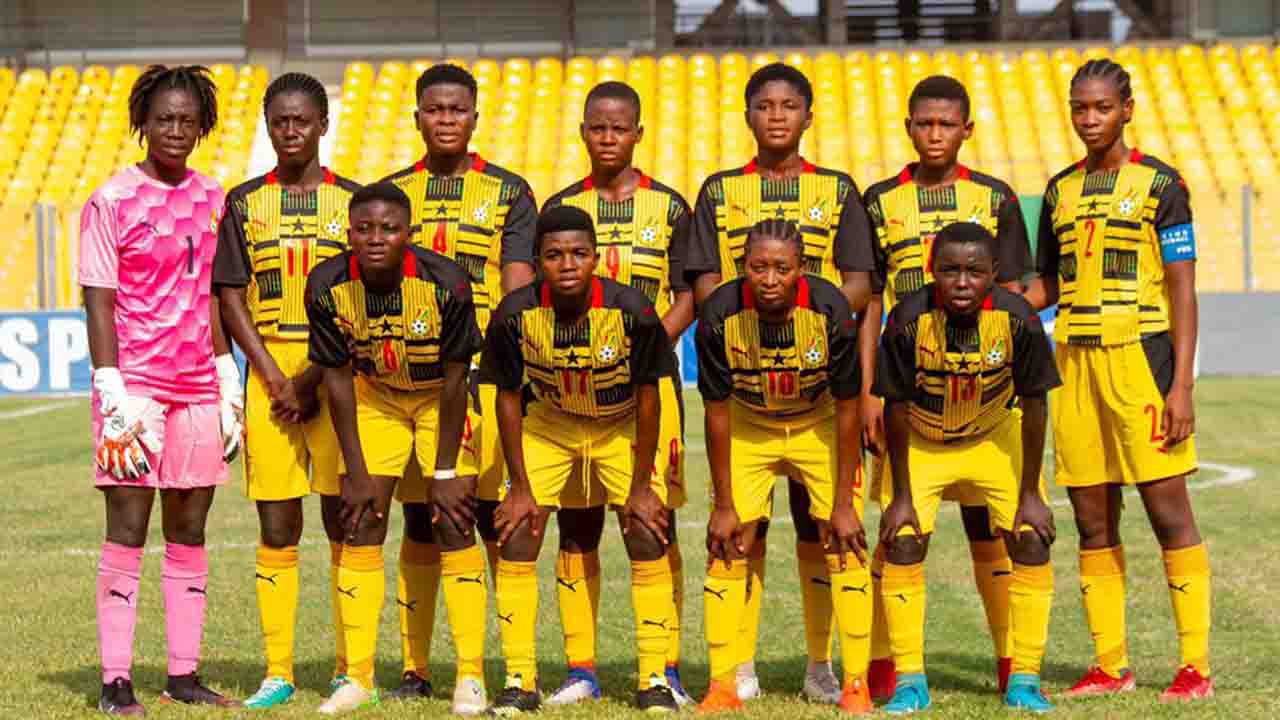

Ghana’s U-17 women’s national team, the Black Maidens, have been eliminated from the 2026 FIFA U-17 Women’s World Cup in Morocco following a narrow 1–0 defeat to Japan in their quarter-final encounter on Sunday, November 1, 2026.
A second-half goal from Japan’s Nanami Kurita proved decisive, ending Ghana’s hopes of progressing to the semi-finals and continuing their pursuit of a first U-17 Women’s World Cup title.
The quarter-final match, played at the Mohammed VI Football Complex in Rabat, saw Japan demonstrate their technical quality and attacking organisation against a determined Ghanaian side that worked hard to keep their opponents at bay.
A Competitive First Half
The Black Maidens approached the encounter with determination, knowing that a place in the semi-finals was within reach.
Japan, however, started with their characteristic passing game, looking to control possession and create opportunities through their movement and combination play.
Ghana responded with a disciplined defensive structure, making it difficult for the Japanese players to find space in dangerous areas.
Despite Japan enjoying more possession and attempting to dictate the pace of the game, Ghana remained organised and showed resilience throughout the opening half.
The Black Maidens also looked to use their physical strength and speed to threaten Japan on the counterattack. However, neither team managed to find the breakthrough before the interval, and the first half ended goalless.
Nanami Kurita Breaks the Deadlock
Japan returned for the second half with renewed attacking intent, and their persistence paid off in the 54th minute.
An attacking move involving Yuka Kishida created the opportunity for Japan. Kishida’s attempt took a deflection inside the penalty area, and Nanami Kurita reacted quickly to the loose ball, finishing from close range to give Japan a 1–0 advantage.
The goal was Kurita’s fourth of the tournament and proved to be the difference between the two sides.
Japan’s Fuki Ito, who was later named Player of the Match, also played an important role in the team’s attacking performance.
Following the goal, Ghana attempted to respond and pushed forward in search of an equaliser. Head coach Joe Nana Adarkwa introduced fresh players, including Priscilla Mensah and Sekinatu Amadu, as the Black Maidens looked to inject more energy into their attack.
Linda Achiaa also came on in the closing stages as Ghana continued their search for a goal.
However, Japan maintained their defensive discipline and successfully protected their lead until the final whistle.
Ghana’s World Cup Journey Comes to an End
Although the defeat marks the end of Ghana’s campaign, the Black Maidens can take encouragement from their performances throughout the competition.
Ghana began the tournament with a 3–0 defeat to Norway before producing an entertaining 3–3 draw against Brazil. The team subsequently recorded victories over Canada and Argentina to secure their place in the knockout stages.
Their Round of 16 encounter against Argentina was particularly memorable.
After playing out a 1–1 draw, Ghana defeated Argentina 5–4 in a penalty shootout to book their place in the quarter-finals. Jessica Appiah was among the standout performers, scoring Ghana’s goal during normal time and converting her penalty in the shootout.
The victory over Argentina demonstrated the team’s determination and ability to compete under pressure.
However, against Japan, Ghana struggled to create enough clear-cut opportunities to trouble their opponents consistently.
The Black Maidens also had to cope with the absence of captain Seidatu Wahab, who missed the quarter-final through injury, while Hajara Adam was suspended following her red card against Argentina.
Osman Rafia took over the captain’s armband for the encounter.
Coach Adarkwa Proud Despite Elimination
Despite the disappointment of exiting the competition, head coach Joe Nana Adarkwa expressed pride in his players and acknowledged their efforts throughout the tournament.
He praised the team for their determination and commitment, while also recognising Japan’s performance.
Adarkwa indicated that the technical team would work on the weaknesses identified during the competition as Ghana looks towards future international assignments.
The experience gained in Morocco will be valuable for the young players as they continue developing their football careers.
Japan Advance to Face Defending Champions
For Japan, the victory represents an important milestone. The team has reached the semi-finals of the FIFA U-17 Women’s World Cup for the first time since 2016, ending a run of four consecutive quarter-final eliminations.
Japan will now face defending champions North Korea in the semi-finals as they pursue another appearance in the final.
The Japanese side previously won the competition in 2014 and will be hoping to add another title to their record.
For Ghana, the journey ends at the quarter-final stage, but the Black Maidens have once again demonstrated the potential of women’s youth football in the country.
While the 1–0 defeat will be disappointing for the players and supporters, the experience of competing against some of the world’s best young footballers provides an important foundation for the future.
Final Score: Ghana U-17 Women 0–1 Japan U-17 Women
Goalscorer: Nanami Kurita (54th minute).
Player of the Match: Fuki Ito (Japan).
Competition: FIFA U-17 Women’s World Cup Morocco 2026 – Quarter-Final.