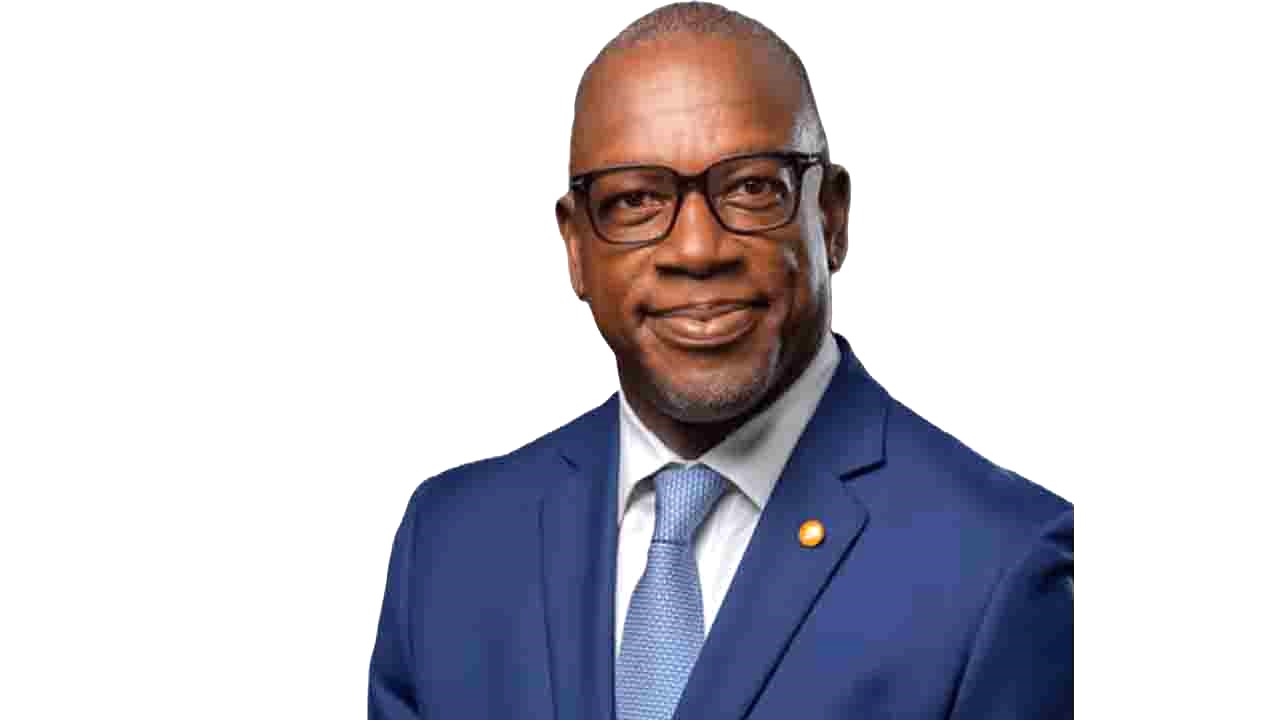

From a chartered accountant working in London’s financial district to founding one of Ghana’s most successful indigenous banks, Edward Effah’s journey offers valuable lessons in entrepreneurship, resilience, leadership and the importance of building businesses at home.
What does it take to build a bank from the ground up? How does an entrepreneur convince investors to support an idea that requires millions of dollars in capital? And what happens when the business you originally envisioned begins to evolve into something much bigger?
These were among the questions explored in a fascinating conversation with Edward Effah, founder of Fidelity Bank Ghana, as he reflected on his entrepreneurial journey, the evolution of Ghana’s banking industry and the lessons he learned from building a financial institution.
Interestingly, after spending years building and leading the bank, retirement has not been difficult for him.
Asked whether he misses running the bank on a day-to-day basis, Effah responded emphatically: “No, not at all.”
He explained that by the time he was between 56 and 58, he had already decided that he wanted to retire at 60. After experiencing what he described as accumulated tiredness, despite receiving a clean bill of health from his doctor, he felt it was time to hand over leadership to a new generation.
He compared the decision to football, where fresh legs are brought onto the pitch to keep the team moving forward.
For someone who had spent years building a bank, it was a deliberate decision to allow new leadership to take the institution into its next chapter.
From London’s Financial District to Building a Business in Ghana
Effah’s entrepreneurial journey did not begin with a plan to establish a commercial bank.
He trained as a chartered accountant in London and worked for financial services company Rudolph Wolff. However, as his career progressed, he began questioning whether the United Kingdom was where he wanted to build his future.
He felt that, despite the professional opportunities available, he did not see himself living and retiring there.
Observing the experiences of other Ghanaians in the UK also influenced his thinking. He noticed that many professionals and entrepreneurs in Ghana appeared to have greater opportunities to establish businesses and exercise control over their professional destinies.
He began considering what he could build back home.
A conversation with a friend in Nigeria, who was establishing a financial institution, further inspired him. Together with his professional background and experience, Effah began exploring the possibility of establishing an investment banking business in Ghana.
His initial ambition was to build what he described as a Ghanaian version of Goldman Sachs.
It was an ambitious idea, but interestingly, he did not begin with the expectation of creating one of Ghana’s largest privately owned banks.
As he explained, entrepreneurship is often a journey of discovery. You do not necessarily see the final destination when you begin.
He referenced the idea that you should go as far as you can see, and when you get there, you will be able to see further.
That philosophy would become particularly relevant as his original business evolved.
Starting with £40,000 and a Determination to Succeed
One of the most interesting aspects of Effah’s story is how he raised the initial capital to establish his business.
When he began putting together the business plan in 1995, he was just 33 years old.
He had accumulated approximately £40,000 in savings from bonuses and other earnings while working in London.
However, establishing a financial institution required considerably more resources.
The money went into registering the company, preparing the business plan, hiring consultants, developing shareholders’ agreements, travelling to meet potential investors and covering other initial expenses.
He initially believed that the work and money he had invested should entitle him to a 10 per cent equity stake in the business.
His proposed arrangement was not immediately accepted.
The shareholders considered 10 per cent too high and eventually agreed to give him 5 per cent as sweat equity, recognising the work, effort and expenses he had contributed.
To secure the remaining 5 per cent, Effah had to demonstrate additional financial commitment.
He transferred his personal car to the company, which was valued at approximately $25,000, and borrowed another $25,000 from a friend to invest in the business.
That was how he secured his initial 10 per cent shareholding.
It is a powerful reminder that entrepreneurship sometimes requires founders to put their personal resources on the line before investors are willing to believe in their vision.
But for Effah, the responsibility went beyond the money.
He recalled approaching investors who trusted him with their resources. Some would look him in the eye and say they were investing $200,000 because they trusted him and expected him not to disappoint them.
That trust created an enormous sense of responsibility.
As he reflected, in the early stages of a business, the first objective is not necessarily profitability. It is survival.
When an Investment Banking Business Became a Bank
The business initially operated as a discount house, focusing on money markets, investment banking and asset management.
It also established a private equity and venture capital fund, investing in companies across different sectors, including technology and manufacturing.
Some of the businesses mentioned in the conversation included SoftTribe and Busy Internet.
The company performed well, recording profits and paying dividends during its early years.
However, the financial services industry was changing.
By around 2004, discount houses were becoming increasingly marginalised globally as banks developed the capacity to trade directly with one another through emerging technology and online trading platforms.
This reduced the role of intermediaries in the wholesale money market.
Effah and his team recognised that they needed to rethink the business.
The opportunity they identified was to transition into commercial banking.
They believed there was room in Ghana for a truly world-class bank that could introduce products and services that were not widely available in the market at the time.
Mortgages, car loans, debit cards, credit cards and automated teller machines were among the products that would help transform banking experiences for customers.
Interestingly, Effah recalled that when ATMs were first introduced in Ghana, some customers were uncomfortable with the idea of withdrawing money from a machine outside a bank.
Many preferred walking into a banking hall and dealing with a teller.
Today, that hesitation seems almost unimaginable.
It illustrates just how much the banking industry has changed over the years.
Building an Indigenous Bank in a Competitive Market
Establishing an indigenous bank was not without its challenges.
At the time, Ghana’s banking sector included state-owned institutions, multinational banks and a growing number of privately owned local banks.
International financial institutions were also entering the Ghanaian market, bringing significant financial resources, established brands and international experience.
Yet Effah believed that being Ghanaian offered a competitive advantage.
He described the experience as playing a home game.
Local entrepreneurs understood the market, had relationships within the business community and were familiar with the economic environment.
He also made an important argument about the role of indigenous banks in national development.
According to him, local banks are often better positioned to understand local businesses and take calculated risks in supporting entrepreneurs operating in sectors such as agriculture, energy and other areas of the economy.
A foreign bank making lending decisions from another country may not always have the same understanding of local businesses and their operating environment.
For Effah, strong indigenous financial institutions are therefore important to the development of local economies.
Is Capital Really the Biggest Problem Facing African Entrepreneurs?
Perhaps one of the most thought-provoking moments in the interview came when the conversation turned to access to finance.
Across Africa, entrepreneurs frequently identify inadequate capital as one of the biggest obstacles to starting and growing businesses.
However, Effah challenged this widely held perception.
His argument was straightforward:
Capital is not necessarily the problem. Knowing how to access capital is the problem.
He explained that, over the preceding decade, banks had consistently received more deposits and had more funds available for lending than the number of viable projects presented to them.
In other words, money was available, but many business proposals did not meet the requirements needed to secure financing.
He pointed to the importance of well-prepared business plans, the viability of business models and the credibility of the people behind the businesses.
He also highlighted the risks banks face, including non-performing loans, economic instability, currency depreciation, energy crises and changes in regulation.
These challenges make financial institutions more cautious about lending.
His argument offers an important lesson for entrepreneurs: having a good business idea is not enough.
A business must demonstrate how it will generate revenue, manage risks, repay borrowed funds and remain sustainable.
For entrepreneurs seeking funding, the ability to communicate the commercial viability of an idea is just as important as the idea itself.
Financial Inclusion and the Evolution of Ghanaian Banking
Effah also reflected on how competition transformed Ghana’s banking sector during the 2000s.
He recalled that in the 1990s, fewer than 20 per cent of Ghana’s population had bank accounts.
Access to financial products was limited, and even professionals could struggle to obtain facilities such as car loans.
As more banks entered the market, competition encouraged innovation and expanded access to financial services.
The introduction of different banking products, cards, mortgages and agency banking helped bring financial services closer to individuals and businesses.
He also discussed the contribution of mobile money to financial inclusion.
Rather than viewing mobile money as a threat to traditional banks, Effah considers it complementary.
Mobile money has helped reach people who may otherwise have remained outside the formal banking system.
This is particularly important for communities and individuals who have limited access to physical bank branches.
The broader lesson is that financial inclusion requires different players in the financial ecosystem to work together.
Knowing When to Step Aside
After years of building and leading Fidelity Bank, Effah’s decision to retire at 60 offers another important leadership lesson.
Founders often become so closely connected to their businesses that stepping aside can be difficult.
However, Effah recognised that leadership succession is part of building an institution that can survive beyond its founder.
His decision to hand over responsibility to fresh leadership demonstrates an understanding that a successful business should not depend indefinitely on one individual.
Building a business is one achievement. Building an institution capable of continuing to grow without its founder is another.
The Bigger Lesson for African Entrepreneurs
Edward Effah’s story is more than the story of a man who founded a bank.
It is a story about recognising opportunities, starting with limited resources, earning investors’ trust, adapting to changing markets and having the courage to evolve beyond an original business idea.
His journey also challenges entrepreneurs to rethink how they approach funding.
Instead of focusing exclusively on how much money they need, they should ask whether their businesses are sufficiently structured, viable and credible to attract investment.
For Africa’s next generation of entrepreneurs, particularly those building businesses in Ghana and across the continent, there is an important message in his experience.
You do not need to see the entire journey before taking the first step.
Sometimes, you simply need to go as far as you can see, build something meaningful along the way and remain prepared to see further.
Because the businesses that eventually shape industries do not always begin with a grand vision. Sometimes, they begin with one idea, limited resources and the determination to make something happen.