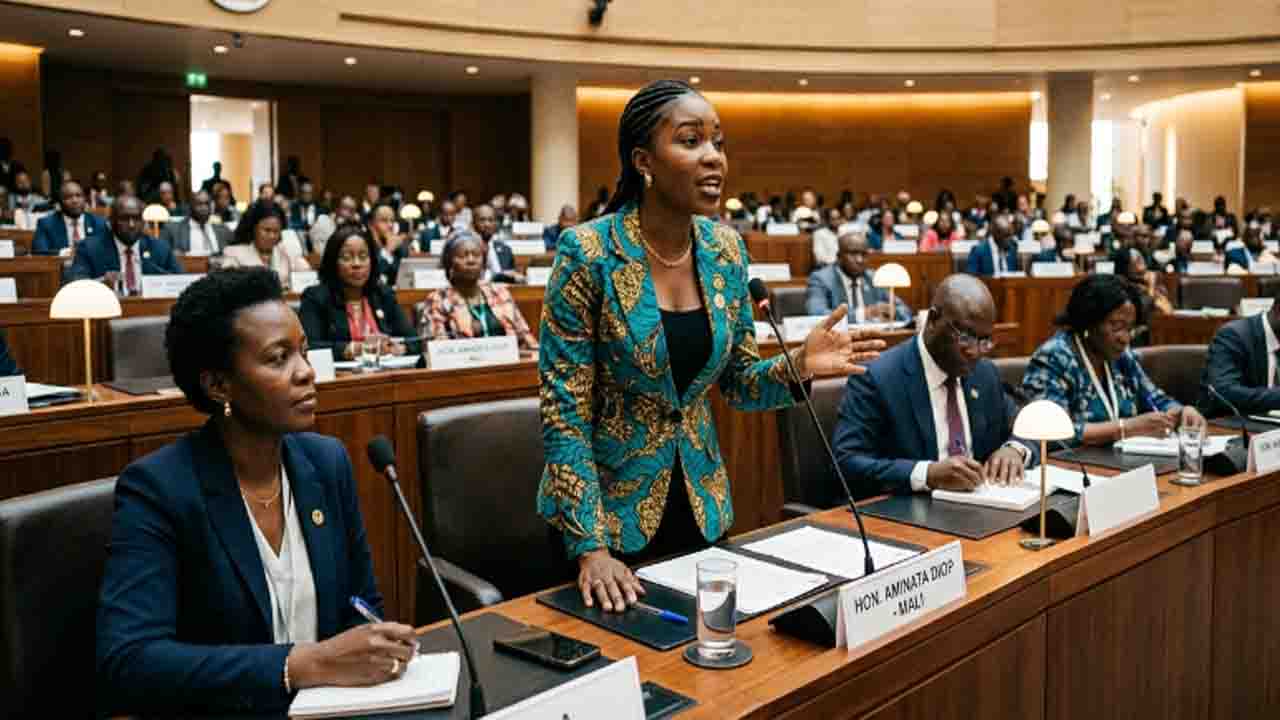

Ghana’s government has announced a significant proposal to reform the country’s parliamentary structure by capping Parliament at 300 seats. Under the proposal, 276 Members of Parliament would continue to be elected through the existing constituency-based electoral system, while 24 additional seats would be reserved for women, persons with disabilities (PWDs), and the youth through a system of proportional representation.
If implemented, the proposal could mark one of the most important electoral reforms in Ghana’s democratic history, aiming to make Parliament more representative of the country’s diverse population.
Understanding the Proposal
According to the Attorney-General, the proposal seeks to maintain Parliament at a maximum of 300 seats.
The proposed composition would be:
- 276 constituency-based Members of Parliament, elected under Ghana’s current first-past-the-post system.
- 24 reserved seats, allocated through proportional representation for women, persons with disabilities, and young people.
Rather than contesting traditional constituencies, candidates for the reserved seats would be selected through a proportional representation mechanism, with the exact rules expected to be defined through legislation.
Why Is This Being Proposed?
The proposal responds to long-standing concerns that certain groups remain underrepresented in Ghana’s political system despite making up a substantial share of the population.
Women
Although women account for roughly half of Ghana’s population, they have historically occupied a relatively small proportion of parliamentary seats.
Barriers such as campaign financing, cultural expectations, political violence, and unequal access to party structures have limited women’s participation in elective politics.
Reserved seats are intended to help address these structural challenges.
Persons with Disabilities
People living with disabilities often face significant obstacles to political participation, including accessibility issues, discrimination, and limited financial resources.
Guaranteeing representation could ensure that legislation more directly reflects their experiences and needs.
The Youth
Ghana has one of Africa’s youngest populations, yet younger people remain underrepresented in Parliament compared with their share of the population.
Supporters argue that increasing youth representation would bring fresh perspectives on issues such as employment, technology, education, entrepreneurship, and climate change.
How Proportional Representation Works
Unlike Ghana’s current constituency-based elections, proportional representation allocates seats based on the share of votes received by political parties rather than individual constituency victories.
This system is widely used in many democracies to improve representation of groups that may struggle to win constituency contests.
Political parties would typically submit candidate lists, and seats would be allocated according to each party’s electoral performance, subject to the rules established by Parliament.
Potential Benefits
A More Inclusive Parliament
The proposal could lead to a legislature that better reflects Ghana’s demographic diversity.
When different voices are represented, policymaking may become more responsive to the needs of society as a whole.
Greater Gender Equality
Increasing women’s participation in Parliament could strengthen discussions around education, healthcare, maternal health, entrepreneurship, child welfare, gender-based violence, and economic inclusion.
Research from many countries suggests that more diverse legislatures often bring broader perspectives to public policy.
Empowering Young Leaders
Reserved seats could encourage more young people to participate actively in politics and public service, helping to prepare the next generation of national leaders.
Stronger Disability Representation
People with disabilities would have greater opportunities to influence legislation affecting accessibility, inclusive education, healthcare, employment, and social protection.
Questions and Challenges
While many have welcomed the proposal, it also raises important questions.
How Will Candidates Be Selected?
One of the biggest issues will be determining how individuals qualify for the reserved seats.
Transparent and fair selection processes will be essential to ensure public confidence.
Defining “Youth”
Legislation will likely need to specify the age range that qualifies someone as a youth representative.
Clear criteria will help avoid disputes over eligibility.
Party Control
If political parties determine candidate lists, some observers may question whether the process will be sufficiently open and merit-based.
Strong internal democratic processes could help address these concerns.
Balancing Equality and Merit
Some critics argue that all parliamentary seats should remain open to competition.
Supporters, however, contend that reserved seats help correct long-standing structural barriers that have prevented equal participation despite equal legal rights.
Lessons from Other Countries
Reserved parliamentary seats are not unique to Ghana.
Several countries have adopted measures to improve representation for women and marginalized groups.
In Africa, nations such as Rwanda have demonstrated that constitutional mechanisms can significantly increase women’s representation in Parliament. Other countries have also introduced quota systems through legislation or party policies.
Each country’s approach reflects its own political context, but the common objective is to build legislatures that more closely reflect the societies they serve.
What This Could Mean for Ghana
If approved, the reform could influence political parties to invest more in developing women leaders, mentoring young politicians, and supporting candidates with disabilities.
It could also encourage greater public participation in democratic processes by giving underrepresented groups stronger voices in national decision-making.
However, the success of the proposal will depend not only on creating reserved seats but also on ensuring transparent implementation, credible candidate selection, and meaningful participation by those elected.
Final Thoughts
Ghana has long been regarded as one of Africa’s strongest democracies. This proposal represents an opportunity to further strengthen that democratic tradition by broadening representation within Parliament.
The debate is likely to continue as lawmakers, political parties, civil society organizations, and citizens consider the details of the proposal. Questions about implementation, fairness, and electoral design will be central to those discussions.
Regardless of the final outcome, the proposal has already sparked an important national conversation about inclusion, equal opportunity, and what a truly representative Parliament should look like in the twenty-first century.
A Parliament that reflects the diversity of its people is not simply about numbers—it is about ensuring that different experiences, perspectives, and voices help shape the laws and policies that affect every Ghanaian.


