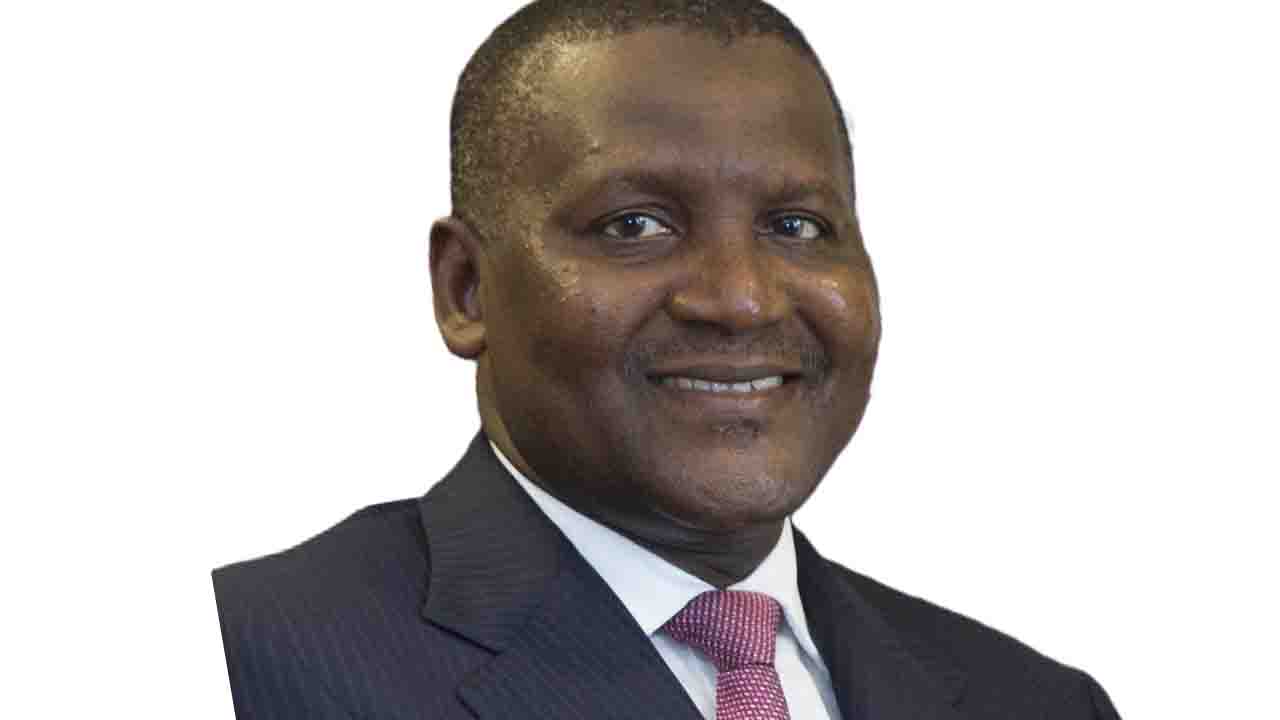

From overcoming years of setbacks to establishing one of the world’s largest refineries, Nigerian billionaire Aliko Dangote shares his vision for African industrialisation, wealth creation and economic independence.
For decades, Nigeria has exported crude oil while importing large quantities of refined petroleum products. Despite being one of Africa’s major oil producers, the country struggled with underperforming state-owned refineries and recurring fuel shortages.
For Aliko Dangote, the Nigerian entrepreneur and President of the Dangote Group, this was more than an economic challenge. It was a problem that African businesses and investors could help solve.
In a recent interview, Dangote reflected on the ambition behind the Dangote Refinery, the obstacles encountered during its construction, and his belief that Africa’s economic future depends on Africans investing in and producing more of what the continent consumes.
A Vision Beyond Personal Wealth
Building a refinery on such a scale was not simply about expanding a business portfolio. Dangote said he believed Africans had to take the lead in transforming the continent.
“I always believe that we Africans were the only ones that can actually take Africa to the promised land,” he said.
He explained that Nigeria had experienced fuel queues for decades, even after establishing several refineries. When those facilities failed to operate effectively, he began considering how the country could address its dependence on imported fuel.
For Dangote, energy is central to economic development. A reliable supply of petroleum products can support transportation, manufacturing and other essential sectors of the economy.
The refinery was therefore conceived as a major industrial project intended to address a longstanding national challenge while demonstrating what large-scale African investment could achieve.
Overcoming Setbacks and Difficult Construction Conditions
Dangote described the refinery project as the most challenging undertaking of his life.
The difficulties began well before production. He recounted an earlier attempt to acquire three of Nigeria’s existing refineries, a transaction that was later revoked. The experience, he said, did not end his ambition to build refining capacity.
The project subsequently faced delays involving land access and infrastructure. Dangote said the company spent years dealing with obstacles at an initial location before moving to Lagos, where it encountered further challenges.
The site required extensive preparation. According to Dangote, much of the land was marshy and needed substantial engineering work. The company also had to raise the land, construct a special road capable of carrying exceptionally heavy equipment and build a port to receive large components.
These demands added time, complexity and cost to an already ambitious undertaking.
Yet Dangote said he never seriously considered abandoning the project. He compared the experience to crossing the Atlantic Ocean: having travelled so far, turning back was not an option.
His account illustrates the scale of planning and persistence required to develop major industrial infrastructure in difficult conditions.
An IPO Designed to Broaden Ownership
During the interview, Dangote explained that the planned public offering of the refinery was not primarily about raising money.
Instead, he said the intention was to allow more people to participate in the business and share in its potential growth.
He described wanting ordinary Nigerians—including workers and families—to have an opportunity to become shareholders.
“We want to see how do we create wealth,” he said, explaining that the approach was inspired by businesses in other parts of the world that invite wider participation as they grow.
Dangote also said the group intended to list other businesses over time, with the aim of broadening ownership and strengthening corporate governance through structures that include independent directors.
The approach, as he described it, would connect industrial expansion with a wider ambition: enabling more people to participate in wealth creation.
Looking Beyond Petroleum Products
Although the refinery is a major focus, Dangote argued that the future of the oil industry cannot be understood only through petrol, diesel or aviation fuel.
He pointed to the many materials derived from crude oil that are used in everyday products, including plastics and synthetic fibres.
He also discussed the demand for aviation fuel, explaining that the company had initially been concerned about the relatively limited market for jet fuel in Africa. He said demand had developed differently from what the company originally anticipated.
His broader argument was that Africa’s growing population will require more energy, infrastructure and industrial production.
Dangote questioned how a continent with a rapidly expanding population could continue relying heavily on imports to meet its needs.
For him, the challenge is not simply to produce petroleum products, but to develop the industrial capacity to manufacture goods and materials within Africa.
Why African Investment Matters
Dangote identified changing government policies and unreliable electricity supply as significant obstacles to investment in Africa.
He argued that businesses need a stable policy environment and dependable power to plan, build and operate successfully.
However, he maintained that African investors also have a role to play. In his view, the continent cannot depend indefinitely on external companies to establish the industries needed for its development.
“If there’s no industrialization, how do you create jobs?” he asked.
He said African countries need to move beyond exporting raw materials and importing finished products, adding value to their resources through local processing and manufacturing.
Dangote also discussed plans for substantial investment in electricity generation, describing power as essential to economic growth. He said the group was considering investing more than $10 billion in the power sector.
His comments placed energy infrastructure within a larger development agenda: creating the conditions for businesses to produce, employ people and expand.
Responding to Criticism and Monopoly Allegations
Dangote was also asked about criticism that his influence and investments could contribute to monopolies.
He rejected the suggestion that he should allow criticism to distract him from his goals. Using a football analogy, he said a player needs to focus on the ball rather than the audience.
He argued that opportunities in the sector were not exclusively reserved for his company and referred to licences issued to other operators, including those developing modular refineries.
His response reflected his view that companies should be prepared to invest and compete rather than wait for others to take the lead.
The debate over market concentration and competition remains an important part of discussions about large-scale industrial projects. Dangote’s comments in the interview presented his own response to those concerns and his explanation of the company’s approach.
Building a Legacy Through Industrialisation
When asked about the future, Dangote returned to the idea of legacy.
He said the group was pursuing major investments across different sectors and emphasised the importance of building management capacity alongside businesses.
He also spoke about the need for Africa to process more of its own raw materials rather than exporting them without adding value.
For Dangote, industrialisation is closely connected to employment, prosperity and the continent’s ability to meet the needs of its people.
He acknowledged that challenges and distractions would continue, but said the company had developed resilience through its experiences.
His message was that Africa must develop the confidence and capacity to build large businesses, invest in infrastructure and create industries that can serve local and international markets.
A Future Built by Africans
Aliko Dangote’s account of the refinery project is a story of ambition, difficult decisions, infrastructure challenges and persistence. It is also an expression of a wider argument about Africa’s economic direction.
He believes the continent needs more African-led investment, stronger industrial capacity, reliable electricity and greater local processing of natural resources.
Whether through refining, petrochemicals, power or other industries, his stated vision is to help shift Africa from dependence on imported products towards greater production at home.
The scale of that ambition is considerable, and its long-term impact will depend on execution, market conditions, governance and the wider economic environment.
But the central idea running through Dangote’s remarks is clear: Africa’s development cannot rely on consuming what others produce. The continent must also build, manufacture, invest and create.