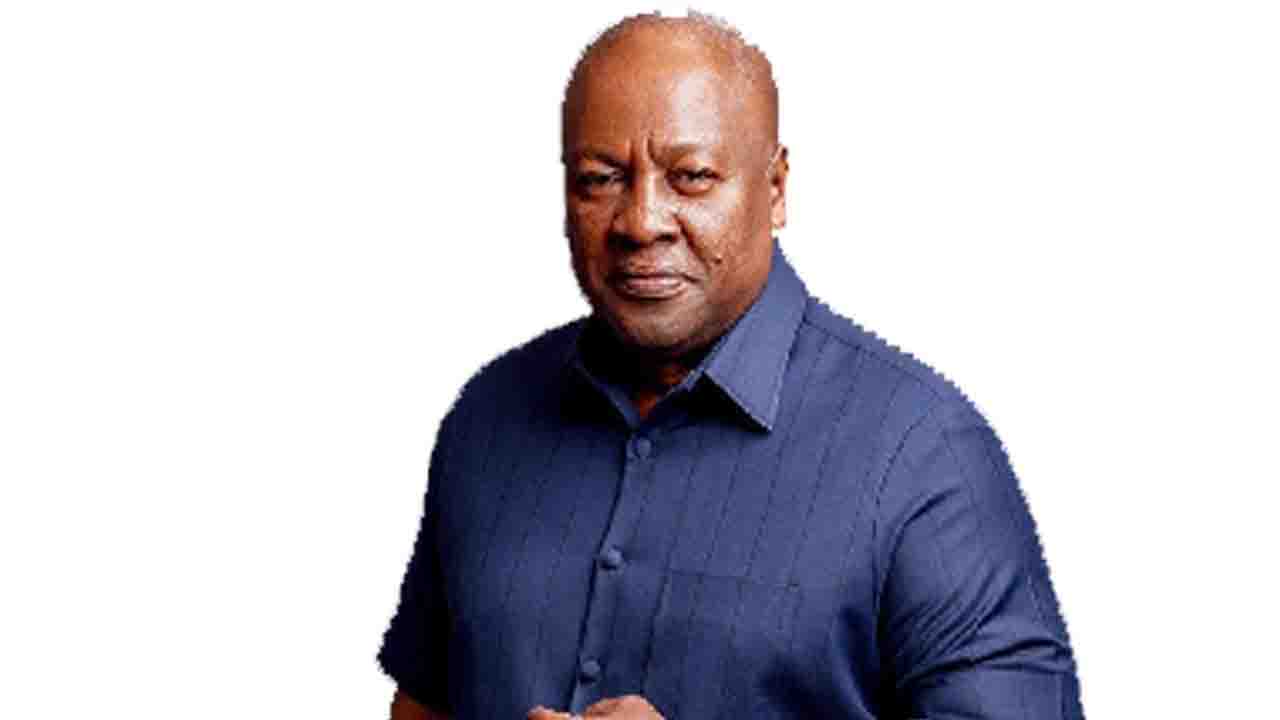

Ghanaian President John Dramani Mahama has outlined an ambitious vision for Ghana and Africa, touching on regional security, economic sovereignty, healthcare, industrialisation, reparatory justice and the future of African integration.
Speaking in an interview hosted by the Council on Foreign Relations (CFR), Mahama discussed some of the major challenges facing Africa and argued that the continent must move beyond dependence on external systems and develop greater capacity to determine its own economic and political future.
Security in the Sahel
Mahama began by addressing the security situation in the Sahel and its implications for Ghana and coastal West Africa.
He argued that the instability affecting countries such as Mali and Burkina Faso cannot be understood simply through the lens of recent military coups. In his account, the destabilisation of Libya following the fall of Muammar Gaddafi contributed to the movement of weapons and extremist groups into the Sahel, creating conditions that intensified existing conflicts.
He also acknowledged the growing divide between ECOWAS and the Alliance of Sahel States, but said Ghana was working to maintain dialogue with its neighbours.
According to Mahama, Ghana’s borders remain open to the Sahelian states, while trade and security cooperation continue. He stressed that the fight against terrorism cannot be won by the affected countries alone and called for continued regional and international support.
Protecting Ghana’s Borders
Mahama said Ghana cannot assume that its relative stability makes it immune from the extremist violence affecting parts of the region.
He acknowledged the difficult choice between spending scarce resources on development and increasing defence spending to strengthen national security. Ghana, he said, is increasing surveillance and intelligence cooperation with neighbouring countries, including Burkina Faso, to monitor extremist movements and exchange information.
A More Effective African Union
With Ghana set to assume the chairmanship of the African Union in 2027, Mahama said his goal would be to make the organisation more effective and relevant to Africans, particularly younger generations.
He identified regional integration, peace and security, and economic cooperation as important priorities.
A central part of his argument was that Africa cannot fully benefit from the African Continental Free Trade Area without the infrastructure needed to move goods efficiently across the continent. He pointed to the difficulty of transporting goods between African countries and argued that roads, railways, ports and direct trade routes must be developed to support intra-African commerce.
The Accra Reset and Health Sovereignty
One of the most significant themes of the conversation was Mahama’s Accra Reset agenda.
He linked the initiative to the reduction of U.S. development assistance and argued that the disruption exposed Africa’s vulnerability to external funding decisions, particularly in healthcare.
Mahama said Ghana wants to strengthen what he called health sovereignty by increasing Africa’s capacity to produce medicines and vaccines locally. He pointed to the COVID-19 pandemic, when African countries faced difficulties accessing vaccines, as evidence of the risks associated with excessive dependence on external producers.
The objective, he explained, is not simply to respond to the next health emergency but to build a stronger African pharmaceutical and healthcare manufacturing base.
Ghana’s Decision on a U.S. Health Compact
Mahama also explained Ghana’s decision to reject a proposed U.S. health compact.
He said Ghana’s health ministry and Cabinet reviewed the agreement and raised concerns about provisions relating to pathogen information, medical records and the inspection of medical products entering Ghana.
Mahama presented the decision as part of Ghana’s broader approach to sovereignty and ownership of its health systems.
Reparatory Justice and the Return of African Heritage
Another major theme was Mahama’s advocacy for reparatory justice.
He connected the return of African cultural artefacts to both identity and economic development. His argument was that cultural heritage should not simply be viewed as something symbolic; museums, tourism and cultural institutions can also become part of Africa’s economic infrastructure.
Using the example of the Mponponsuo sword, Mahama argued that important African artefacts should be accessible in the communities and countries from which they originate. He also referenced the Benin Bronzes and the broader discussion about restitution of African cultural heritage.
Challenging the Global Financial Architecture
Mahama was particularly critical of the existing international financial system.
He argued that the debt challenge facing African countries begins before debt restructuring. In his view, African countries face significantly higher borrowing costs, while illicit financial flows and other mechanisms also drain resources from the continent.
His broader call was for reform of the global financial architecture, including cheaper access to capital, greater African representation in international institutions and a larger role for Africa within organisations such as the IMF.
He said Africa should have a permanent seat on the United Nations Security Council and a greater voice in multilateral institutions.
Industrialisation and Adding Value in Africa
Mahama repeatedly returned to one central economic message: Africa must move from exporting raw materials to processing and manufacturing them.
During the discussion on electric vehicles, he described Ghana’s emerging EV policies, including regulations around manufacturing, imports and charging infrastructure. He also pointed to automobile assembly plants operating in Ghana.
But the conversation went beyond electric vehicles.
Mahama said Ghana intends to stop exporting raw mineral ores by 2030 and expects mining companies to undertake at least primary and secondary processing. He also announced an ambition to process 50 percent of Ghana’s cocoa beans locally as an initial step toward greater value addition.
The underlying argument is that African economies should capture more of the value created from the resources they produce rather than exporting raw materials and importing finished products.
The Diaspora as Ghana’s “Seventeenth Region”
Mahama also highlighted the economic importance of the Ghanaian diaspora.
He described the diaspora as Ghana’s “seventeenth region”, pointing to remittances from Ghanaians abroad as an important contribution to the economy.
However, he said Ghana wants to move beyond remittances toward investment. The government, he explained, is working on frameworks that would encourage members of the diaspora to invest in businesses, industrial projects and shares while providing greater confidence around the safety of their investments.
The Twenty-Four-Hour Economy
Mahama also explained his government’s 24-hour economy initiative as a strategy for increasing production and employment.
Rather than having factories operate primarily during a single daytime shift, the government wants to incentivise businesses to add additional shifts where demand exists.
The proposed incentives include tax measures, reduced electricity tariffs and duty-free access to certain machinery and equipment. Mahama said the objective is to increase industrial output while creating more employment opportunities, particularly for young people.
Reducing Political Interference in State-Owned Enterprises
The president also discussed plans to list some Ghanaian state-owned enterprises on the stock exchange.
He said the government had prepared ten state-owned enterprises for possible listing, with the objectives of improving corporate governance, reducing political interference and allowing citizens and members of the diaspora to participate as shareholders.
The proposal reflects a broader theme running throughout the interview: creating institutions and economic structures that are less dependent on political cycles.
A Broader Vision for Africa
Across the nearly 48-minute conversation, Mahama returned repeatedly to a common theme: greater African ownership.
Whether discussing healthcare, natural resources, cultural heritage, international finance, manufacturing, the diaspora or regional integration, his argument was that Africa needs greater capacity to determine what happens to its resources and institutions.
His vision also places Ghana within a broader continental project. With the country preparing to chair the African Union in 2027, Mahama presented regional integration, peace and security, economic value addition and stronger African institutions as areas where Ghana intends to play a more active role.
The interview offered a wide-ranging look at how Ghana’s president views the challenges facing Africa—and his argument that the continent’s next phase of development should involve not simply attracting investment and assistance, but building greater African ownership of the systems, industries and resources that underpin its future.