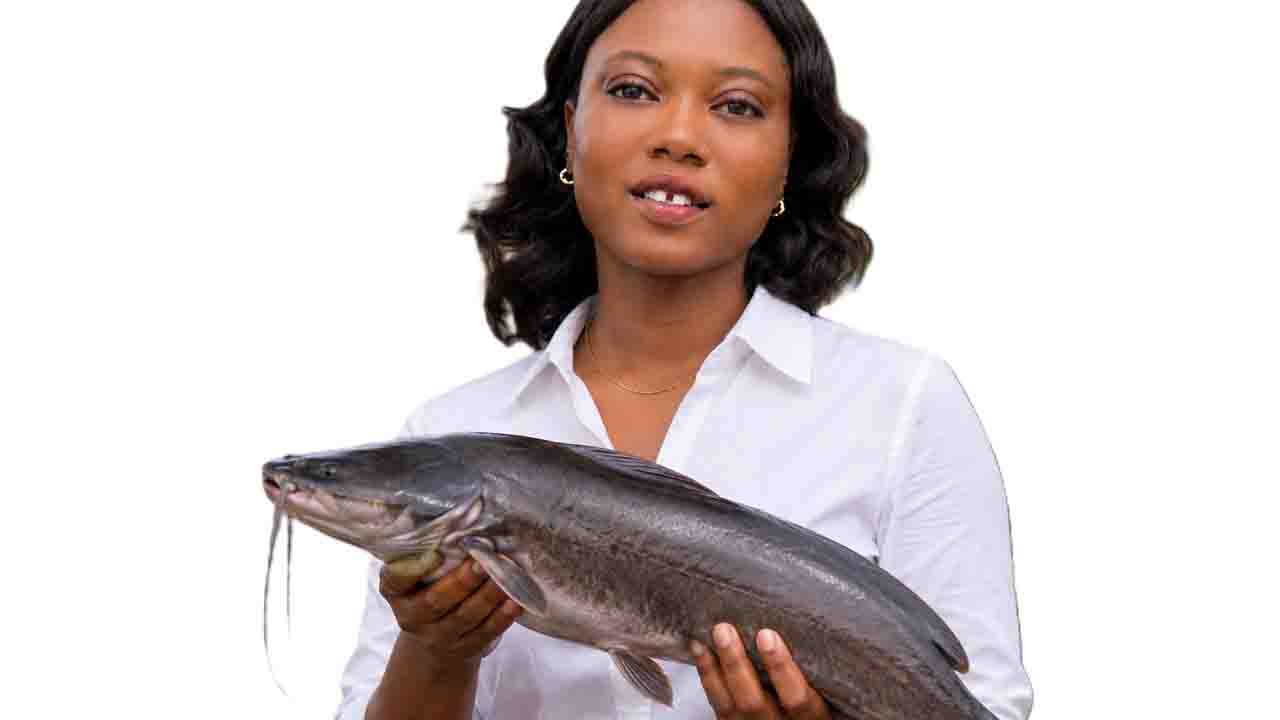

What started as following her husband into fish farming has grown into a successful business for Florence Austin Okafor, who now manages a farm with more than 30,000 catfish.
When Florence Austin Okafor graduated from university, fish farming was nowhere in her plans.
She had studied Banking and Finance and, like many graduates, imagined herself building a career in the corporate world. Working in a bank and practising what she had studied seemed like the natural path.
Then her husband introduced her to something completely different.
Today, more than 12 years later, Florence is a catfish farmer based in Benin City, Edo State, Nigeria, and has built a thriving business that has become an important part of her life and family.
From following her husband to building her own farm
Florence says it was her husband who first inspired her to consider fish farming.
Her husband had already entered the business and had received training and mentorship. Florence initially followed him to the farm, helping with one task or another. Gradually, what began as simply supporting her husband became something much bigger.
She fell in love with the business.
Eventually, she established her own farm and began growing it into a successful enterprise.
Her husband’s experience also gave her an advantage when she was starting out. Because he had already been trained and had a mentor, Florence was able to learn from someone who understood the realities of the business.
Still, finance presented a challenge at one point. Rather than waiting until she had enough money to build a large operation, she started small and gradually expanded.
Starting small and growing steadily
Florence’s journey demonstrates that starting small does not necessarily mean thinking small.
She initially started with about 600 catfish. There was even a difficult period when she experienced fish mortality while preparing for her wedding. The setback could easily have discouraged her, but with encouragement from her husband, she started again.
At the time, she was operating from a rented apartment with a relatively small space. After moving to a larger location, she increased her capacity from about 1,500 fish and continued expanding—to 3,000 and eventually toward 4,000 fish per production cycle in that particular setup.
Today, however, her operation is on a completely different scale.
Florence says she sells about 15,000 catfish every month and currently has more than 30,000 catfish on her farm.
The biggest mistake new fish farmers make
For Florence, having money is not enough to succeed in fish farming.
One of the biggest mistakes she sees among new farmers is assuming that investing a large amount of money will automatically produce quick returns.
Some people come into the business with millions of naira expecting to double their investment within a few months. But according to Florence, knowledge should come before investment.
She strongly encourages beginners to seek proper information, training and mentorship before putting substantial amounts of money into the business.
“What we need is your understanding about the business first.”
She also warns against relying entirely on information found online. According to her, not everything a new farmer needs to know can be found on the internet.
Experience, she says, matters.
You don’t need millions to start
Although fish farming can be capital-intensive, Florence believes aspiring farmers with limited resources can still begin on a smaller scale.
She advises beginners to start with what they can afford, learn the business and grow gradually.
For someone with limited capital, she suggests starting with a smaller number of fish—even in a backyard setup—and selling directly to consumers where possible.
Direct sales, she explains, can give small-scale farmers better margins than selling through third parties.
Her message is simple:
Start small, learn, and grow.
Paying attention to the fish can make all the difference
Fish farming requires more than feeding fish and waiting for them to grow.
Florence stresses the importance of paying attention to the health of the fish every day.
Farmers need to watch for signs of stress, changes in swimming behaviour, mortality and other symptoms that could indicate disease or poor conditions. Detecting problems early, she says, can prevent much bigger losses later.
Water quality is another important part of the business.
Before establishing her current farm, Florence says they tested the water and checked its pH to ensure it was suitable for the fish. She also notes that changes in weather, particularly during the rainy season, can affect water conditions, making monitoring important for farmers.
Why catfish?
For Florence, the decision to concentrate on catfish is largely about market demand.
She says catfish has a stronger market in her area than tilapia, and the local demand influenced the direction of her business.
Location, she explains, matters when deciding what type of fish to farm. Rather than simply following what is popular elsewhere, farmers need to understand what customers in their own market actually want.
She still likes to feed her own fish
Despite having workers who assist with tasks such as changing water, carrying feed and maintaining the farm, Florence remains hands-on.
She says she loves feeding the fish herself because it allows her to observe their reaction and notice changes in their behaviour.
Her husband is also actively involved.
The couple visit the farm together every day, working alongside their employees and personally handling some aspects of the operation.
Looking back
Perhaps one of Florence’s most revealing reflections came when she was asked what she wished she had known before entering the business.
Her answer was that she wished she had discovered how profitable catfish farming could be much earlier in life.
She believes she could have built the business much sooner if she had known what she knows today.
But there is no looking back.
More than a decade after taking her first steps into fish farming, Florence Austin Okafor has transformed what began as an introduction from her husband into a business of her own.
Her story is a reminder that entrepreneurship does not always begin with a grand business plan. Sometimes, it begins with curiosity, the willingness to learn, the courage to start small and the determination to keep going after setbacks.
For women considering entrepreneurship, Florence’s journey offers a particularly important lesson: you don’t always have to start with everything figured out. You can learn, build and grow along the way.
And sometimes, the opportunity you never planned for can become the business you never imagined.


