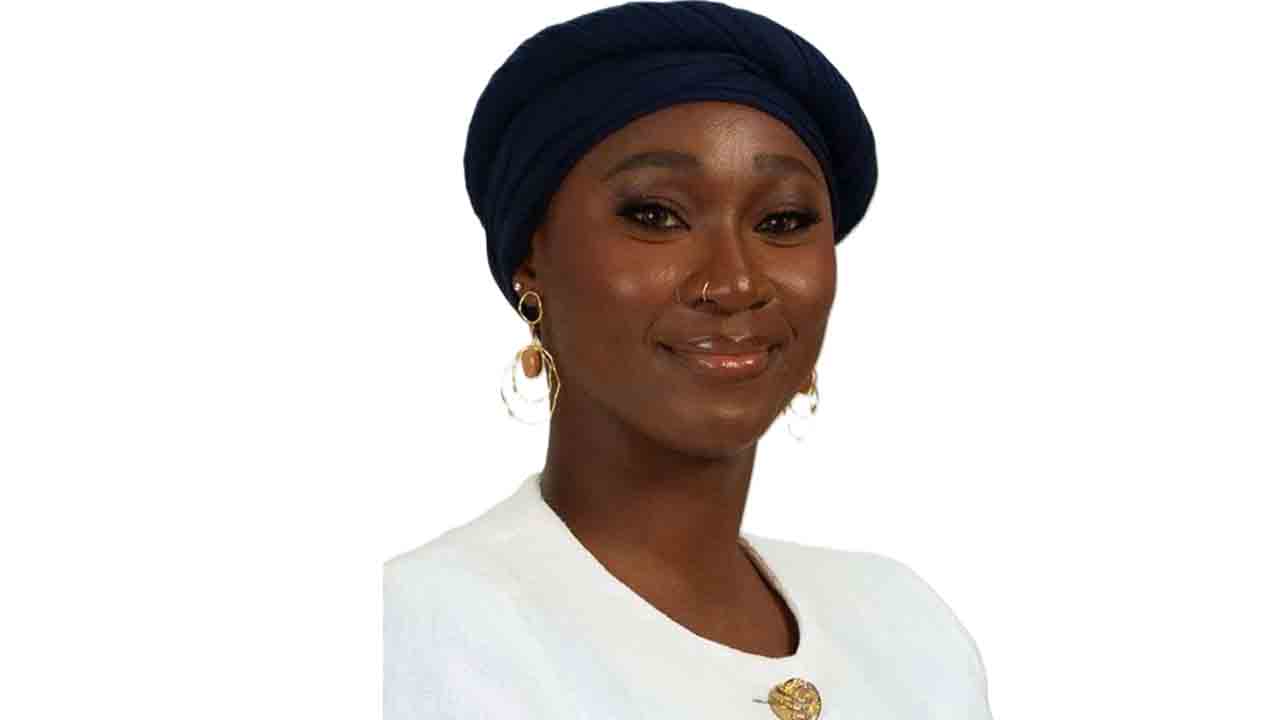
For many young professionals, building a successful career can feel like following a carefully mapped-out path. For Anne Otieno, however, the journey has been anything but linear.
From growing up in Kenya and imagining careers in nursing, aviation and engineering to studying economics and computer science in the United States, Anne’s career has been shaped by curiosity, adaptability and a willingness to explore opportunities even when she did not have all the answers.
Today, she works at Google as a Global Product Strategy Lead, building strategies around technology products and helping businesses and teams understand how to communicate their value and drive adoption.
But getting there was not something she planned from childhood.
A career path she never planned
Growing up in Kenya, Anne remembers having several ideas about what she wanted to become.
At different points, she considered becoming a nurse, a pilot and even a chemical engineer. By her final year of high school, however, her interests had shifted towards business, finance and economics.
She eventually began studying at the University of Nairobi before moving to the United States, where she studied economics and computer science.
The transition from economics to computer science was challenging.
She added computer science during her second year of university, describing programming as almost like learning a completely new language.
But the challenge also introduced her to something she found exciting: the ability to create something and actually see it work.
“I think the endless possibilities, the ability to create something—you create it and you see it,” she explained.
Rather than trying to figure everything out alone, Anne learned to collaborate with teaching assistants and fellow students.
That experience would become an important lesson for her career: you do not have to know everything before you begin.
How a LinkedIn post changed everything
Interestingly, working at Google was not originally one of Anne’s major career ambitions.
As an international student in the United States, her immediate goal was simply to find opportunities that would help her develop professionally.
During her second year of university, she began looking for internships and attending conferences. Then she came across a LinkedIn post about Google’s BOLD internship programme, which provided an opportunity for students from colleges that might not traditionally have equal access to opportunities at major companies.
She applied.
Eventually, an email arrived informing her that she had been selected for an interview with Google.
For Anne, it was surreal.
She had not spent years thinking, I must work at Google. She simply wanted to work for a good company and had the courage to apply when an opportunity appeared.
That decision changed the direction of her career.
Starting at Google and learning on the job
Anne’s first experience at Google was not in software engineering.
She entered through the business organisation and eventually worked in roles involving product support and product solutions, helping customers troubleshoot and understand Google’s products.
Her recruitment process involved interviews focused largely on behavioural and situational questions, along with some analytical questions.
Her previous experiences also became valuable during the interviews. She drew from her internships, university work and experiences through her college’s work-and-study programme.
But perhaps one of the biggest factors in her success was preparation and her willingness to learn.
For Anne, the ability to learn may be one of the most important skills anyone can develop.
The skill that has carried her career
Anne believes that being teachable and adaptable is more important than having every skill listed in a job description.
Her own career is evidence of that.
What she studied at university was not exactly what she ended up doing professionally. Yet her ability to learn new things allowed her to move between different roles and gradually move closer to product strategy and product management.
She believes young professionals sometimes make the mistake of waiting for the “perfect” job.
But the first opportunity does not necessarily have to be the final destination.
A role can become a stepping stone.
For Anne, working in product support helped her develop something that later became extremely valuable: customer empathy.
By dealing directly with customers and seeing what was working and what was breaking, she gained a better understanding of how products should actually be built.
That experience continues to influence how she approaches product strategy today.
What does a Global Product Strategy Lead do?
Anne’s current work sits at the intersection of product, marketing, strategy and customer needs.
Working primarily around Google Analytics products, she helps teams think through questions such as:
- What is the value of a new product or feature?
- Who are the key customers?
- How should the product be positioned?
- How should sales teams communicate its value?
- What will encourage customers to adopt it?
Her role involves working across different teams, including product managers, marketing, sales and regional teams.
She also brings feedback from customers and markets back to product teams.
In simple terms, Anne helps connect what a technology product can do with why customers should care about it.
Why data matters to businesses
Working with Google Analytics has also strengthened Anne’s belief in the importance of data.
Today’s businesses are increasingly operating online, making it possible to understand how customers discover them, where they come from and what they do once they arrive.
Businesses can use data to understand which channels are bringing customers, which pages they visit and which campaigns are generating conversions.
For small businesses in Africa, this can be particularly valuable.
Instead of relying entirely on assumptions or word of mouth, entrepreneurs can use digital tools to understand their customers and make better decisions.
And, as Anne points out, Google Analytics is a tool that businesses can use to gain this type of insight.
The skills African women need for global opportunities
When asked what young women in Africa should start developing today, Anne points to two areas: digital skills and human skills.
Digital literacy is becoming increasingly important, particularly as artificial intelligence and other technologies reshape the workplace.
But technology alone is not enough.
Anne believes communication, collaboration, relationship-building and the ability to work effectively with others will remain essential—even in an era dominated by AI.
She also encourages young people to gain practical experience while they are still in school.
That could mean volunteering, participating in hackathons, taking internships or simply getting involved in activities that allow them to build relationships and apply what they are learning.
Do not just focus on your grades. Build your skills and your network too.
The importance of social capital
One of the biggest lessons Anne wishes she had understood earlier is the importance of social capital.
As a first-generation student, she did not grow up surrounded by a large network of people who had already gone through university or established careers in corporate America.
Technical skills helped her get through the door.
But as she progressed professionally, she realised that relationships, communication and networks become increasingly important.
For professionals hoping to move into senior leadership positions, she believes technical competence alone is not enough.
You also need to know how to build relationships, communicate effectively and navigate the human side of organisations.
Her advice: Don’t be afraid of rejection
Perhaps the most powerful message from Anne’s journey is simple:
Apply anyway.
She could have looked at Google and decided that a student from a small college in Kentucky would never be selected.
Instead, she applied.
She did not know exactly where the opportunity would lead, but she gave herself the chance to find out.
Throughout her career, she has continued to embrace that mindset.
She has moved between roles at Google because she was curious enough to ask questions, reach out to people and explore what different opportunities could offer.
Sometimes, she admits, you may not have all the required skills.
Give it a shot anyway.
You can learn.
What comes next for Anne?
Anne’s ambitions continue to evolve.
She hopes to move further into product management or product marketing management while continuing to grow within the corporate world. At the same time, she remains open to eventually building something of her own.
For now, she is focused on developing herself both professionally and personally, while exploring side projects and seeing where her journey takes her.
And perhaps that is the biggest lesson from her story.
Her career was not built by knowing exactly where she would end up.
It was built by being curious, learning continuously and being willing to take the next opportunity.
A journey of belief
If Anne had to describe her journey to Google in one sentence, she would describe it as a journey of believing in herself.
She did not know that a student from a small college would be able to make it into one of the world’s most recognised technology companies.
But she applied anyway.
And when new opportunities appeared, she allowed herself to be curious.
Her story is a reminder to young women across Africa that the career path does not always have to be perfectly clear.
Sometimes, you simply need to take the next step.
You may not have every skill. You may not know exactly where the journey will take you. And you may not think you are the person companies like Google are looking for.
Apply anyway. Learn anyway. Try anyway.
Because, as Anne’s journey demonstrates, sometimes the opportunity that changes your life begins with nothing more than seeing a post on LinkedIn and deciding to give it a shot.