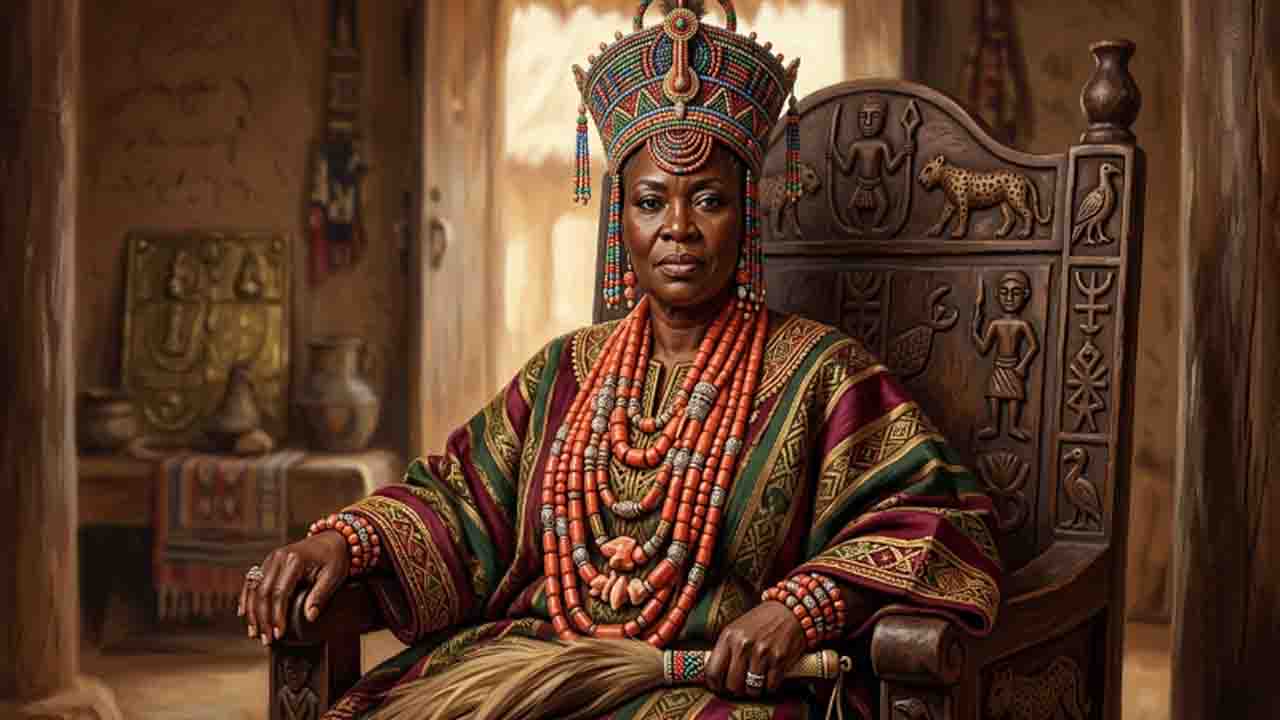

When discussing traditional African leadership, many people assume that kingship has always been reserved exclusively for men. While this has largely been the case throughout Yoruba history, there is one extraordinary exception that continues to fascinate historians, cultural scholars, and the Yoruba people themselves.
Her name was Luwo Gbagida, and according to Yoruba oral tradition, she remains the only woman to have ascended one of the most revered traditional thrones in Africa the throne of the Ooni of Ife. Rather than serving as a queen through marriage, Luwo Gbagida ruled as the sovereign monarch, carrying the same authority, responsibilities, and title as any male king.
The Ooni of Ife
The Ooni of Ife is one of the most respected traditional rulers in Nigeria. Ile-Ife, located in present-day Osun State, is regarded by the Yoruba people as the cradle of their civilization and the spiritual birthplace of humanity according to Yoruba cosmology.
For centuries, the Ooni has served not only as a political leader but also as a custodian of Yoruba culture, religion, and tradition. The throne has historically been occupied by men, making Luwo Gbagida’s reign particularly remarkable.
Who Was Luwo Gbagida?
Although precise historical records are limited, Yoruba oral history identifies Luwo Gbagida as the only woman ever to reign as Ooni of Ife. Historians believe she ruled several centuries ago, likely between the 10th and 12th centuries, though the exact dates remain uncertain due to the reliance on oral traditions passed down through generations.
What distinguishes Luwo Gbagida from other influential women in African history is that she did not rule as a queen consort or regent. She was recognized as the kingdom’s supreme ruler—the king.
This distinction is significant because it demonstrates that, under exceptional circumstances, Yoruba society was willing to recognize leadership based on capability and legitimacy rather than gender alone.
A Visionary Leader
Traditional accounts describe Luwo Gbagida as an innovative and forward-thinking ruler.
She is credited with encouraging improvements to the physical appearance and organization of Ile-Ife. Some traditions suggest she promoted better town planning, cleaner streets, and the construction of more organized residential compounds.
While historians continue to debate which achievements can be verified, her reputation as a progressive ruler has endured through centuries of storytelling.
Why Was She the Only Female Ooni?
One of the enduring mysteries surrounding Luwo Gbagida is why no other woman has occupied the throne since her reign.
There is no definitive historical explanation. Some traditions suggest that political developments after her reign reinforced male succession, while others believe her rule was an extraordinary exception rather than a change in tradition.
Whatever the reason, every subsequent Ooni has been male, making Luwo Gbagida a unique figure in Yoruba history.
Women in Yoruba Leadership
Although Luwo Gbagida remains the only female Ooni, Yoruba history is rich with powerful women who exercised significant political, military, economic, and spiritual influence.
Examples include:
- Moremi Ajasoro, celebrated for her bravery and sacrifice in defending Ile-Ife.
- Madam Tinubu, a nineteenth-century merchant and political strategist who influenced both Lagos and Abeokuta.
- Efunroye Tinubu, one of West Africa’s most influential businesswomen of her era.
- Numerous female chiefs, priestesses, and market leaders who played central roles in governance and community development.
These women demonstrate that leadership within Yoruba society has taken many forms, even when the highest traditional throne was generally occupied by men.
Oral Tradition and Historical Evidence
Like much of early African history, the story of Luwo Gbagida has been preserved primarily through oral tradition rather than written documentation.
This means that some details of her reign cannot be confirmed with complete historical certainty. However, oral history remains a respected source of cultural knowledge and has preserved countless aspects of African civilizations long before written records became widespread.
Rather than diminishing her importance, this highlights the richness of Africa’s storytelling traditions and the need for continued historical research.
Lessons for Today
Luwo Gbagida’s story offers an important reminder that leadership should be measured by wisdom, integrity, and service—not by gender.
At a time when conversations about women’s representation in leadership continue across Africa and the world, her legacy challenges the misconception that women have never occupied positions of supreme authority in traditional African societies.
Her reign stands as evidence that African history includes remarkable women whose contributions deserve recognition alongside those of men.
Conclusion
Centuries after her reign, Luwo Gbagida remains one of the most intriguing figures in Yoruba history. As the only woman traditionally recognized to have ruled as the Ooni of Ife, she occupies a unique place in African leadership.
Whether viewed through the lens of history, culture, or inspiration, her story reminds us that exceptional leadership can emerge from unexpected places. It also encourages a deeper appreciation of Africa’s rich heritage—one in which women have long played vital roles in shaping communities, preserving traditions, and leading with courage.
As we continue to rediscover and celebrate Africa’s past, Luwo Gbagida’s legacy deserves to be remembered as a testament to the enduring power of visionary leadership beyond gender.


