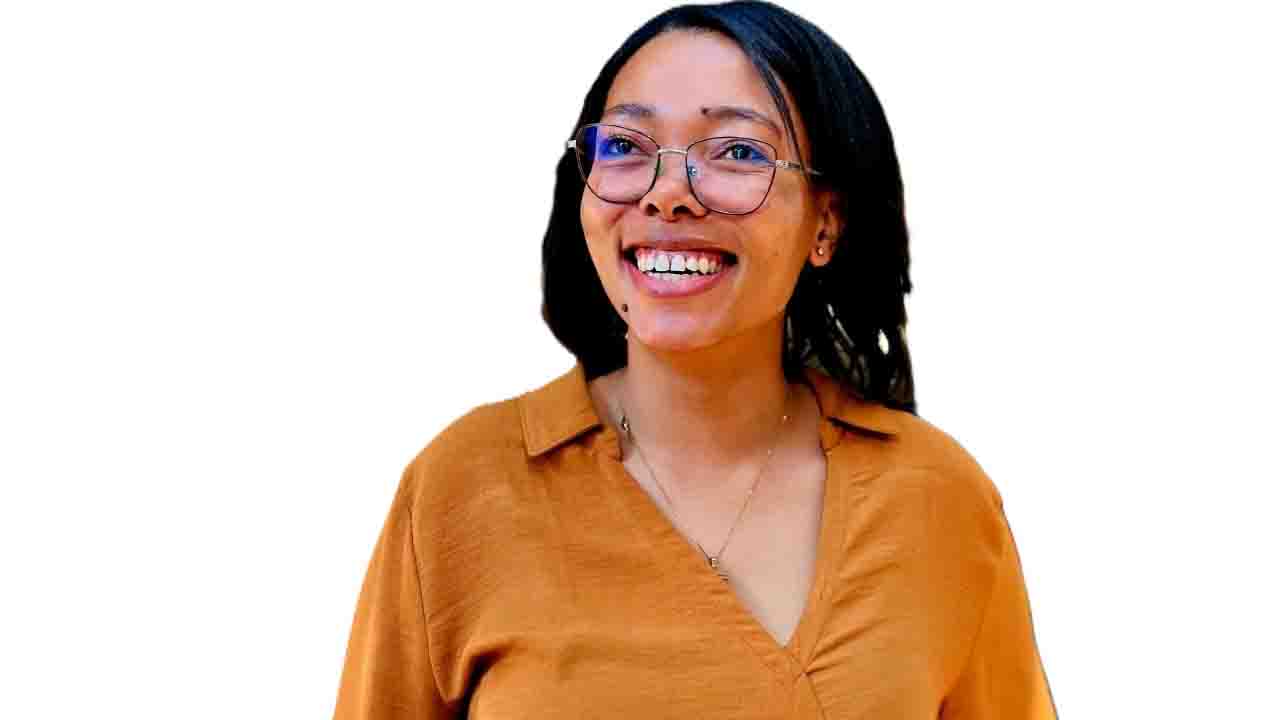

What happens when a young woman discovers, out of necessity, that there is more than one way to create an opportunity?
For Matebogo Dorothy Mokgatla, AGA (SA) entrepreneur, business strategist, professional accountant, auditor, and Founder of InnovateIQ Consultancy, that lesson began long before she established her consultancy.
As a high school student, Mokgatla sold sweets to raise money for university application fees. What appeared to be a small hustle became her first real encounter with entrepreneurship—and a lesson that would shape how she sees business to this day.
“It paved a way for me to see that there’s more than one way of making a living or creating resources from nothing,” she recalls.
That early experience taught her to look beyond conventional paths, particularly when resources are limited. Today, that mindset is reflected not only in her professional journey but also in the ventures she is developing to solve practical socioeconomic challenges.
Learning to Believe in Herself
Like many young entrepreneurs, Mokgatla’s biggest obstacle was not necessarily a lack of technical ability. It was self-belief.
When she began offering accounting services after completing her professional training, she worried that a client might ask her to do something she was not capable of handling.
“I don’t have to have all the answers to start, but I am actually more capable than I think I am,” she says.
That realization became an important part of her entrepreneurial development.
Over time, she also built a network of professionals she could consult, collaborate with and refer work to when necessary. For Mokgatla, entrepreneurship did not require knowing everything. It required the confidence to begin, the humility to seek help and the willingness to keep learning.
Building a Bridge Between Informal Businesses and the Formal Economy
Mokgatla’s passion for entrepreneurship extends beyond her own business. One of the areas closest to her heart is Africa’s informal economy.
Millions of entrepreneurs operate businesses outside the traditional formal corporate structure. Yet these businesses still face many of the same compliance, financial and administrative realities as larger companies.
This is where she sees an opportunity for InnovateIQ Consultancy.
The consultancy was established to serve as a bridge between informal traders and businesses and the formal economy, helping entrepreneurs navigate the process of formalizing their businesses without being overwhelmed by its complexities.
For Mokgatla, compliance is not simply paperwork or an obligation to government institutions. It is part of the foundation of a sustainable business.
“It’s the very foundation of every business. It’s the backbone of every business,” she explains.
Her work includes compliance-related services such as tax return advisory and helping businesses remain aligned with their reporting obligations.
Why Compliance Can Become a Competitive Advantage
For many small businesses, compliance is often viewed as an unnecessary burden—something to worry about once the business becomes bigger.
Mokgatla believes the opposite.
She argues that good compliance practices should become part of a company’s DNA from the beginning. Businesses interact with institutions and third parties throughout their lifespan, and maintaining the necessary regulatory requirements is therefore unavoidable.
But beyond simply avoiding penalties or problems, proper compliance can give entrepreneurs greater structure and confidence as they grow.
The same principle applies to corporate governance.
Mokgatla believes that governance should not be reserved for large corporations. The culture and decision-making practices established by founders from the earliest days of a business can determine how that business operates as it grows.
“If the business grows then the foundation has already been set in place,” she explains.
For startups, therefore, good governance is not about creating unnecessary bureaucracy. It is about establishing healthy systems, accountability and decision-making practices early.
AI: The Greatest Equalizer of Our Time?
One of the most compelling parts of Mokgatla’s entrepreneurial philosophy is her view of artificial intelligence.
She describes AI as one of the greatest equalizers of our time because it is lowering the cost of accessing knowledge, tools and professional capabilities.
For small businesses operating with limited resources, this can be transformative.
She gives a personal example. Earlier in the year, she needed a website and received a quotation of approximately R10,000. After learning how to use AI effectively, she was able to build the website herself at almost no additional cost.
Her argument is not that professionals are no longer necessary. Rather, AI gives entrepreneurs who previously could not afford certain services an opportunity to access tools and capabilities that were once financially out of reach.
For African small and medium-sized enterprises, where stretched margins are often a reality, that can make a significant difference.
Africa Must Not Become Just a Consumer of AI
However, Mokgatla’s optimism about AI comes with an important warning.
Africa must not simply become a consumer of technologies developed elsewhere.
She points to the limitations and potential biases that can arise when AI systems are primarily trained on data and contexts outside Africa. If African realities are underrepresented in the systems shaping the future, African businesses and communities risk being poorly served by those technologies.
There is also an environmental and infrastructural dimension.
As AI adoption grows, the demand for data centres and the energy required to operate them will increase. Mokgatla believes African countries must carefully consider how this infrastructure is developed and who benefits from it.
Her concern is rooted in history.
Africa has experienced generations of external extraction of its resources without Africans necessarily receiving proportional benefits. Mokgatla believes the continent has an opportunity to avoid repeating that pattern in the digital economy.
Africa should not merely consume AI.
It should participate in building it.
Technology and the Next Generation of African Business Leaders
When asked which industry could create the next generation of African business leaders, Mokgatla points to technology.
For her, this is not simply because technology is currently popular. Its real potential lies in its ability to address socioeconomic challenges at scale.
African entrepreneurs have something particularly valuable: lived experience.
“No one knows Africa like Africans living in it,” she says.
That understanding gives African innovators the ability to develop solutions grounded in local realities and potentially scale those solutions across multiple countries.
Rather than building products that solve problems for one community alone, technology can enable entrepreneurs to develop solutions that can be replicated and adapted across borders.
Entrepreneurship as a Tool for Social Change
Mokgatla is currently developing multiple ventures, and the motivation behind them is deeply connected to her own experiences growing up in South Africa.
She describes South Africa as a country with significant inequality and says her upbringing exposed her to situations where systems designed to advance society could overlook the very communities that needed them most.
That experience influenced the kinds of businesses she wants to build.
One of her ventures, Remote Set, seeks to digitize the process of certifying documents remotely. In South Africa, document certification can still require people to physically visit places such as police stations or commissioners of oaths.
For people living in rural communities or people with limited physical mobility, this can create unnecessary barriers.
Mokgatla sees technology as an opportunity to redesign such systems around the realities of people’s lives.
Another venture focuses on retrofitting DSTV satellite dishes to provide fibre-ready internet connectivity at affordable prices, particularly for lower-income communities.
The common thread is clear: technology should not leave vulnerable communities behind.
Looking for Opportunities Others Overlook
Mokgatla’s ability to identify unconventional opportunities comes from her own experience with limited resources.
Instead of viewing the obstacles she encountered growing up only as disadvantages, she learned to see them as clues to potential solutions.
For her, the strongest business opportunities are not necessarily those that are immediately obvious.
They are often found in the problems that people have become accustomed to living with.
But there is another important dimension to her entrepreneurial philosophy.
A successful business, in her view, should not only benefit the entrepreneur.
It should create a ripple effect within the community it serves.
“I’d like to see opportunities where the people benefiting from them are not just passive consumers,” she says.
That belief places social impact at the centre of her approach to innovation.
Making Entrepreneurship a Legitimate Career Path for Women
Mokgatla believes Africa also needs to change the way society understands entrepreneurship.
Too often, entrepreneurship is presented as something people pursue because they cannot find employment or need an additional source of income.
She believes entrepreneurship should instead be recognized as a legitimate career path in its own right.
That shift, she argues, should begin in education.
If schools and educational institutions promoted entrepreneurship with the same seriousness with which they prepare young people for formal employment, more young Africans could begin to see business creation as a realistic future.
The change is therefore not only economic.
It is also psychological.
Young people need to believe that entrepreneurship is possible for them.
A Message to Young African Women
For young African girls dreaming of building businesses that can transform their communities and the continent, Mokgatla’s message is simple but powerful:
They are capable. They are worthy. And their perspectives are needed.
She believes the world benefits when women participate in building businesses and shaping solutions because women’s experiences often bring perspectives that might otherwise remain missing.
For Mokgatla, women’s participation in entrepreneurship is not simply about individual success.
It is about building stronger communities.
Women, she argues, can contribute to creating solutions that are inclusive and benefit not only individuals but the wider society.
Her own journey—from selling sweets to raise university application fees, to becoming a professional accountant and auditor, founding a consultancy, embracing artificial intelligence and developing technology-driven ventures—illustrates the very principle she wants young women to understand:
Your starting point does not have to determine your destination.
Sometimes, the limitations you experience can become the very source of the ideas that change your life—and eventually, the lives of others.
As Africa stands at the intersection of entrepreneurship, technology and rapid digital transformation, voices like Mokgatla’s offer an important reminder: the continent does not only need more businesses.
It needs businesses built by Africans, for African realities, and designed to ensure that the communities most often overlooked are finally part of the future being created.


