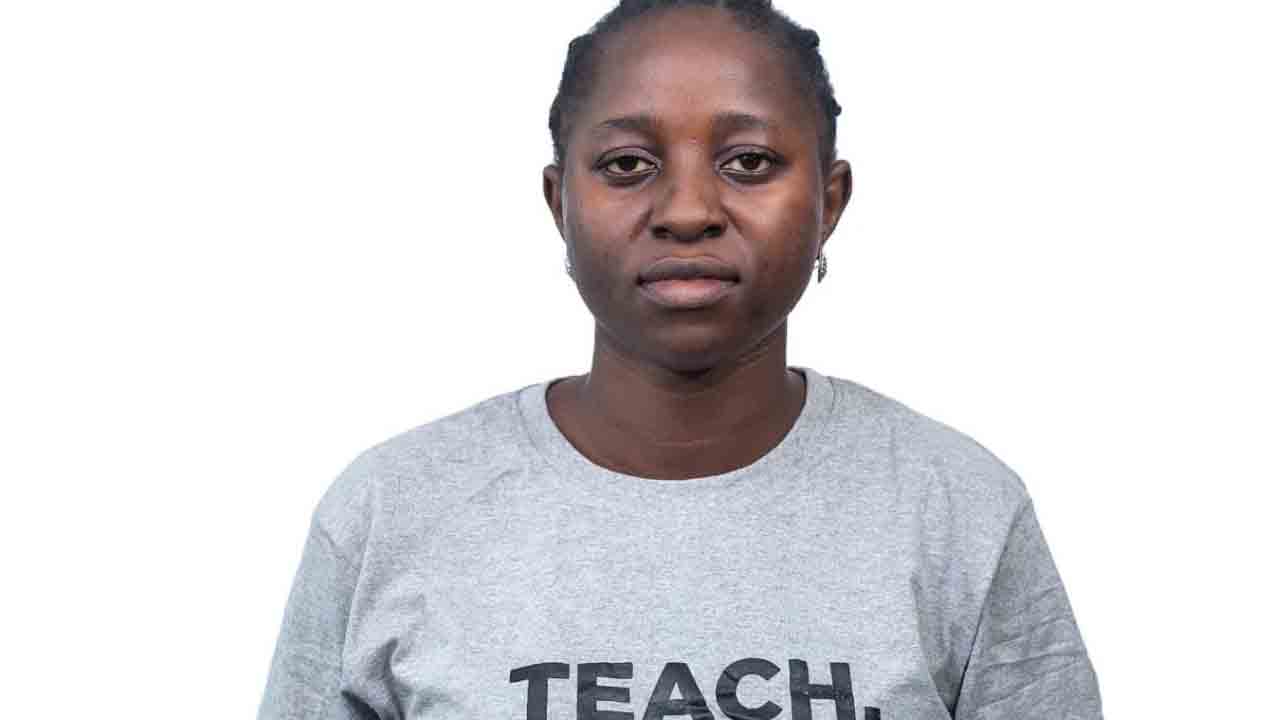

Mercy Atinuke Ilori is an educator whose work goes far beyond lesson plans and classrooms. A Teach For Nigeria Fellow, Mercy teaches in a remote riverine community in Nigeria, where access to quality education remains a daily struggle but also a space for immense transformation.
In this interview with Just4WomenAfrica, Mercy shares her journey into education, the realities of rural teaching, and why language, mentorship, and strong foundations are critical to shaping Africa’s future.
A Calling Born in Childhood
Mercy’s journey into education began early. Growing up, she often sat in her mother’s classroom, watching her teach and inspire young learners.
“My mum was a teacher. I used to stay in her class and watch how she taught children. That inspired me. I told her I wanted to be like her I just wanted to be where children are.”
Her bond with children came naturally. From school to church children’s ministry, Mercy found herself drawn to spaces where young minds were being shaped. That early exposure planted a seed that would later grow into a lifelong commitment to education and community service.
Joining Teach For Nigeria further deepened that commitment, giving her the platform and structure to serve in underserved communities where her impact is most needed.
Life Inside the Classroom
Mercy teaches Mathematics, English, and Basic Science, using interactive and learner-centered methods. Her classroom thrives on peer-to-peer learning, group work, games, chants, and affirmations that build confidence.
“We use play methods. My class chants ‘We are great leaders,’ and that alone excites them and makes them feel seen.”
One key aspect of her teaching approach is allowing learners to express themselves in their local language (Yoruba) before transitioning concepts into English. This, she says, removes fear and builds understanding.
The Realities of Rural Education
Teaching in a remote area comes with deep challenges. Mercy describes poor infrastructure, lack of learning materials, and economic hardship as daily obstacles.
Many pupils arrive at school without books, pencils, or even school fees. Their parents mostly farmers often spend weeks or months away on farms, leaving children without consistent guidance.
Exposure is another major challenge.
“Some children tell me they want to become a motorcycle rider because that’s all they see. They’ve never been outside their community.”
These moments pushed Mercy to introduce mentorship and career conversations, helping learners imagine futures beyond their immediate environment.
The Power of Language in Learning
Mercy strongly believes that mother-tongue instruction plays a vital role in early education.
“Teaching in their local dialect is better at first. They express themselves freely without fear or shame.”
However, she is also intentional about exposing learners to English, recognizing its importance as a global language.
“English is important because they won’t stay here forever. They need to be exposed.”
Her approach blends both building confidence through local language while steadily strengthening English communication.
Helping Children Learn to Read
To address low literacy levels, Mercy and her team introduced a Rural Champions Initiative and adopted the Teaching at the Right Level (TaRL) approach. This meant going back to basics regardless of a child’s age.
“Some of these learners were in Primary 4 and 5 but couldn’t read. I went back to ABCs with them.”
They sat on the floor, relearned numeracy and literacy, and rebuilt foundations that had been missed. Today, many of those once-shy children now read confidently and even participate in public speaking.
Partnerships Needed for Lasting Impact
Mercy is actively seeking partnerships with:
- NGOs focused on education, agriculture, and recycling
- Grassroots educators and mentors
- Organisations committed to long-term community development
She believes such collaborations can expand opportunity and reshape the futures of children in remote communities.
Looking Ahead: The Future of Teach For Nigeria
Mercy is optimistic about the future of Teach For Nigeria, noting its expanding impact and alignment with the global Teach For All network.
“They are filling a gap in remote areas that cannot be ignored. I am a living example of the impact.”
Her time in the community transformed not only the children but her own sense of purpose.
“I came without a clear plan. But staying here helped me understand why this work is needed.”
Final Thoughts
Mercy Atinuke Ilori’s story is a powerful reminder that education is not just about curriculum it is about presence, patience, and possibility. By meeting learners where they are and daring them to dream beyond their surroundings, she is helping shape a more hopeful future for rural Nigeria.