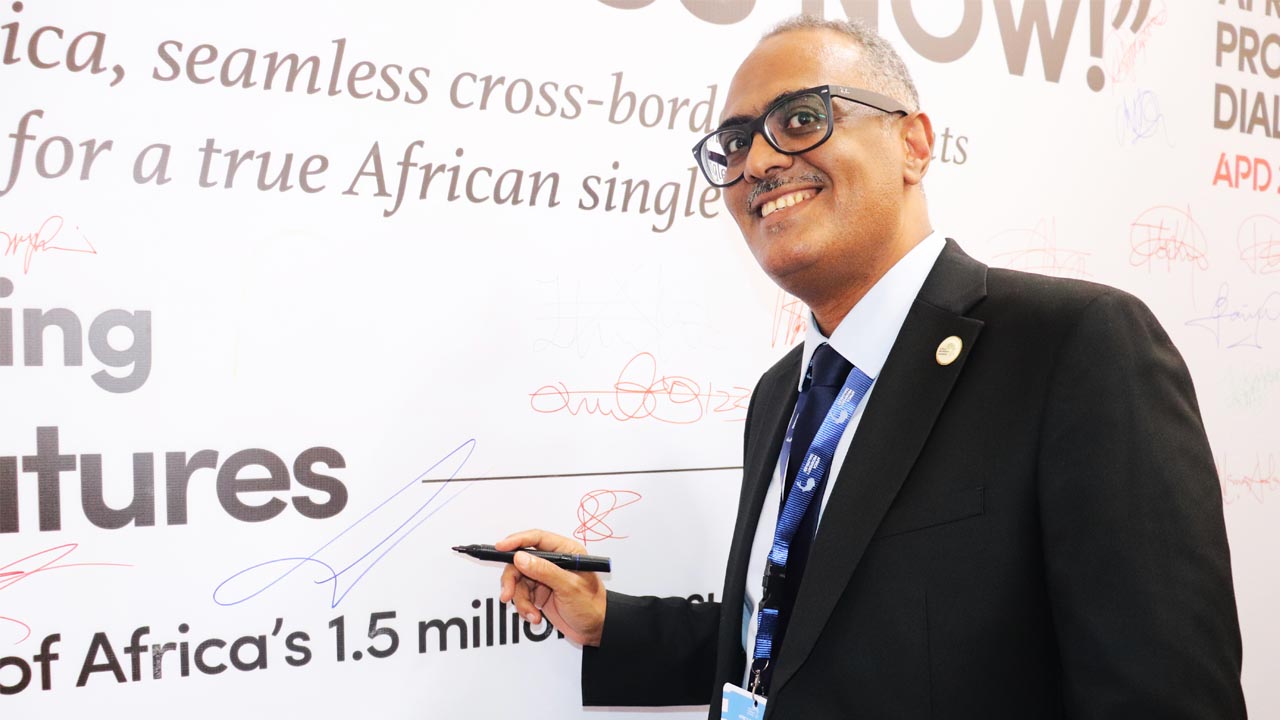

The Africa Prosperity Dialogues (APD) 2026, held in Accra, Ghana, from 4th to 6th February 2026 convened policymakers, business leaders, development partners, and civil society actors around one bold and transformative vision: a borderless Africa.
At the heart of this year’s dialogue was an ambitious continental campaign aimed at collecting 1.6 billion signatures a symbolic and political statement of African citizens’ collective demand for deeper integration, seamless movement, and the full realization of the African Continental Free Trade Area (AfCFTA).
APD continues to position itself as more than a conference. It is a platform for action, ideas, and accountability, aligning Africa’s political will with the everyday economic realities of its people.
The “Make Africa Borderless” Campaign
The borderless Africa initiative seeks to dismantle the structural, bureaucratic, and policy barriers that continue to fragment African economies. Despite shared geography, history, and aspirations, African countries still face restrictive visa regimes, high tariffs, non-tariff barriers, and inefficient border processes that limit trade and mobility.
The campaign’s call for 1.6 billion signatures reflects the continent’s population and sends a clear message: Africans want an integrated market where goods, services, capital, and people can move freely across borders.
This vision aligns squarely with the objectives of AfCFTA, which aims to create the world’s largest free trade area by number of countries, unlocking industrial growth, job creation, and intra-African trade.
What a Borderless Africa Means for African Women
For African women who dominate informal and cross-border trade a borderless Africa could mean lower costs, safer mobility, access to regional markets, and the ability to scale businesses beyond national limits.
For many women traders, it represents not just economic freedom, but dignity, safety, and growth.
Across Africa, women are the backbone of informal trade networks, often navigating hostile border environments marked by harassment, extortion, and insecurity. Simplified border processes, harmonized trade policies, and regional market access would directly improve women’s livelihoods, reduce vulnerability, and formalize their economic contributions.
A borderless Africa is therefore not gender-neutral. It is a gender opportunity one that could unlock unprecedented economic power for women-led micro, small, and medium enterprises.
Empowering SMEs and Africa’s Informal Economy
Beyond women traders, APD 2026 emphasized the role of SMEs and informal businesses as Africa’s true economic engines. Fragmented markets force small businesses to remain local, limiting growth and competitiveness.
An integrated Africa would enable:
- Regional value chains
- Cross-border partnerships
- Access to larger consumer markets
- Reduced logistics and compliance costs
For young entrepreneurs and innovators, this means scaling ideas beyond borders without the current regulatory and financial bottlenecks.
Leadership Driving the Vision
Under the leadership of Sidig Eltoum, CEO of the Africa Prosperity Network, APD has continued to evolve into a results-driven platform that connects policy conversations with real-world outcomes.
Eltoum’s leadership emphasizes pragmatism, inclusion, and continental ownership, ensuring that Africa’s integration agenda is not driven solely by governments but by citizens, entrepreneurs, and communities themselves.
The Road Ahead
The conversations at APD 2026 made one thing clear: Africa’s future prosperity depends on integration. A borderless Africa is no longer a distant ideal it is an economic necessity.
However, translating vision into reality will require:
- Political commitment from member states
- Gender-responsive trade policies
- Infrastructure investment
- Protection for informal and small-scale traders
- Continued citizen engagement
The 1.6 billion signatures campaign is a reminder that integration must be people-driven, not just policy-led.
As Africa looks inward to trade with itself, move within itself, and grow from within, initiatives like APD 2026 offer a powerful roadmap one where women, youth, and small businesses are not on the margins, but at the center of Africa’s prosperity story.


