
“Africa is not poor. It’s been mispriced. But who is doing the mispricing? We are.”
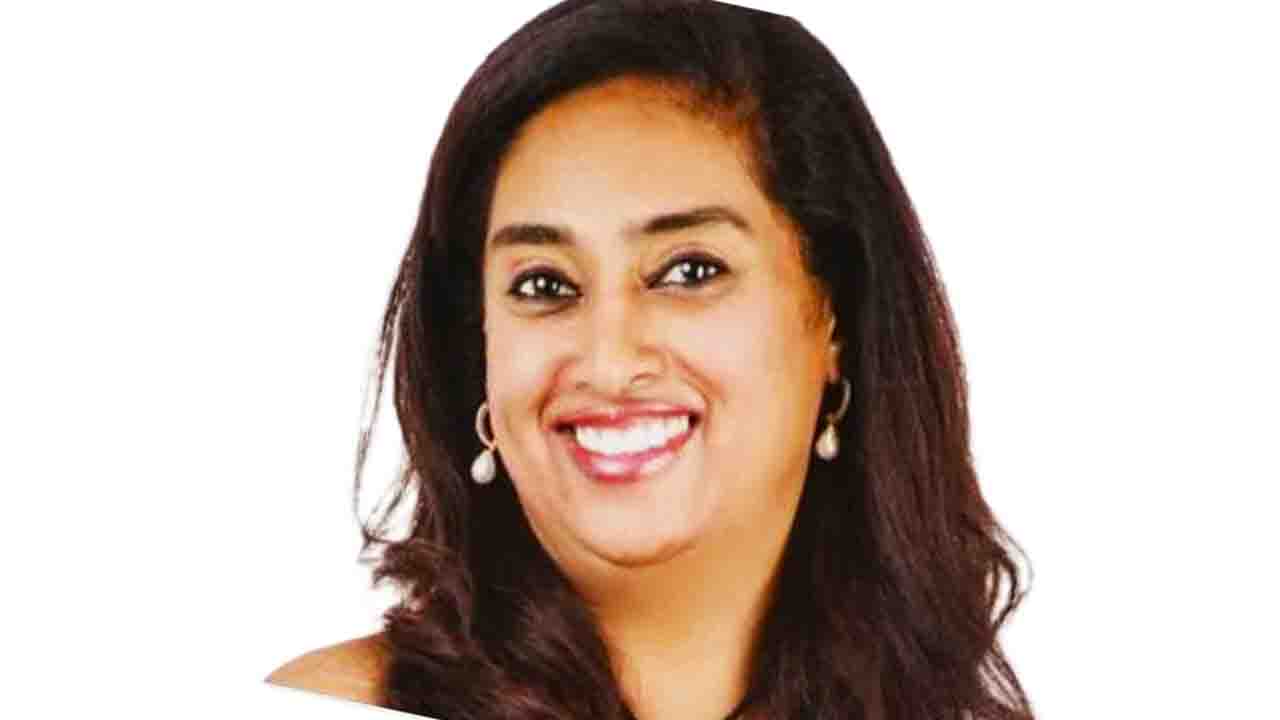
For Fatima Alimohamed, Africa is more than a geographical identity. It is a responsibility.
A respected brand strategist, business leader and passionate advocate for African enterprise, women and agriculture, Fatima has spent decades working across the continent and helping build and champion brands. But behind the boardrooms, business strategies and leadership positions is a woman who has also spent much of her life confronting questions of identity, belonging, power, sacrifice and what it means to build something that outlives you.
In a candid conversation on Voices of a Continent, Fatima described herself not simply as Kenyan, but increasingly as a Pan-Africanist — a Kenyan who happens to live and work on the African continent.
“I say I’m a Pan-African who just happens to be Kenyan,” she explained, reflecting on how her understanding of identity has evolved through years of travelling across Africa. She has visited more than 30 African countries and says that wherever she goes, she feels that she belongs.
Yet that belonging has not always been automatically granted to her.
A Woman Navigating Multiple Identities
Fatima is Kenyan and of Indian heritage, with a family history that stretches across generations in East Africa. She described being fourth generation, with her daughter being fifth generation.
Her experiences have made her question what it really means to be African.
She recalled being stopped by police in Ghana while travelling with African women and being the only person in the vehicle asked to produce identification.
The experience stayed with her.
“What do I have to do to really be accepted as African?” she asked.
For Fatima, the answer has increasingly been to embrace Africa as a whole.
Her Pan-African outlook is not simply philosophical. It influences how she sees business, leadership, consumer rights, trade, women and the continent’s enormous economic potential.
It is also central to why she calls herself an “African Brand Warrior.”
For her, being a brand warrior is not only about marketing.
It is about fighting for recognition, fighting for better standards and fighting for Africans to recognise the value of what they already have.
“Africa Is Not Poor. It’s Been Mispriced.”
Few statements from the conversation captured Fatima’s worldview better than her assertion that Africa is not poor — it has been mispriced.
She argues that the continent possesses enormous natural resources, human capital, culture and economic potential, yet Africans frequently have little influence over the systems that determine the value of those resources.
From gold and diamonds to cocoa, she questioned why countries producing enormous quantities of valuable commodities often have limited influence over their pricing and global positioning.
But Fatima does not place the blame entirely outside Africa.
In her view, Africans themselves must confront the role they play.
“We don’t sit on any of the platforms that determine the value of anything right now,” she argued.
This, she believes, is partly a leadership problem and partly a mindset problem.
Her frustration extends beyond governments to businesses and individuals who prioritise quick gains over building sustainable systems.
She described what she sees as a culture of looking for shortcuts.
“A shortcut is a wrong cut,” she said.
For Fatima, Africa’s development cannot depend permanently on outsiders determining the continent’s value. Africans must become more deliberate about creating, owning and controlling the systems that shape their economies.
The Problem With the African Poverty Narrative
Fatima also challenged the way Africa is frequently presented to the world.
She believes the continent has allowed a narrative of poverty to become too deeply embedded in how Africans see themselves and how others see Africa.
Her description of Africa is dramatically different.
If Africa were a person, she said, she would imagine someone covered in gold, greenery, wealth, knowledge, culture and richness.
The contradiction, however, is that extraordinary wealth and extreme poverty can exist within a very short distance of each other.
For Fatima, this is evidence that the problem is not simply a lack of resources.
It is also about how those resources are managed and distributed.
She believes Africans must stop asking only how quickly an individual can become wealthy and start asking how societies can create systems that generate opportunity for more people.
Fighting for the Consumer
One of the less discussed areas of Fatima’s work is her concern about consumer rights and brand integrity.
She is particularly critical of brands that make public commitments to social causes but fail to maintain those commitments once the attention disappears.
She pointed to the wave of corporate social responsibility initiatives during COVID-19 and the public positioning of companies following the death of George Floyd.
For her, the question is what happens after the headlines disappear.
Are companies still investing in the communities they claimed to support?
Are they still solving the problems they publicly acknowledged?
Or was the commitment simply part of a marketing moment?
Fatima believes consumers increasingly have the power to ask these questions, particularly through social media and non-traditional media.
She is a strong supporter of independent voices online because ordinary people with smartphones are often willing to ask questions that larger media organisations may be less willing to pursue.
She believes Gen Z, in particular, has embraced this culture of questioning.
“They do not hide their feelings,” she observed.
For Fatima, that questioning can be healthy because it forces brands to become more transparent and accountable.
African Problems Need African Solutions
Fatima is encouraged by the emergence of African startups, incubators and accelerators developing solutions to African problems.
But she believes financing remains one of the biggest challenges.
African entrepreneurs may have solutions designed specifically for their communities, but accessing capital can sometimes mean accepting funding that comes with conditions, agendas or expectations.
She also believes Africa needs to pay greater attention to the role of small and medium-sized businesses.
The African Continental Free Trade Area, she argued, should not be viewed only through the lens of large corporations.
SMEs can become critical suppliers within larger value chains.
Her example was simple: if a Ghanaian shoe company receives an order for 100,000 pairs but has the capacity to produce only 10,000, the remaining 90,000 pairs could potentially come from smaller producers.
The opportunity, therefore, is not simply for one company to grow.
It is for businesses to build ecosystems around one another.
Women Do Not Need Permission to Be Powerful
Fatima’s perspective on women’s leadership is equally uncompromising.
She rejects the idea that women need to discover their power before they can exercise it.
In her view, women have always been powerful.
The problem is that society has not always recognised or rewarded that power.
After years of working in male-dominated organisations and frequently being the only woman in senior environments, Fatima learned to enter boardrooms with confidence.
Her philosophy is straightforward: if she does not know something, she will learn it.
She believes one of the challenges women face is that they often invest less time in themselves because of the enormous responsibilities placed on them.
Women may be expected to care for children, parents, households and other people while simultaneously building demanding careers.
Men, she argued, can sometimes have greater freedom to use social activities, leisure time and professional networks as opportunities to develop relationships and advance their careers.
For women, creating time for self-development can be considerably more difficult.
Her message is therefore not simply that women should demand opportunities.
They must also invest in themselves so that when opportunities arrive, they are ready.
The Hidden Cost of Success
Behind Fatima’s confidence is a story of considerable personal sacrifice.
She started working young and says she has been promoted every year throughout her career. From her first job, she stopped relying financially on her parents.
But professional success came alongside profound personal challenges.
She became a single parent while navigating a lengthy divorce. Her divorce proceedings lasted around a decade, and at one point she faced an arrest warrant in Uganda.
At the same time, her father was terminally ill.
She was also building a career that required extensive travel.
There were moments when she had to leave her daughter with caregivers while travelling for work. She described the guilt of missing important moments in her daughter’s childhood and later recognising that some of the gifts she brought home were partly an attempt to compensate for her absence.
Then came another devastating chapter.
Fatima described suffering a serious health crisis that left her paralysed for a period while she was still expected to manage professional responsibilities.
Work documents were brought to her hospital for signing.
Yet she continued.
Her story reveals an uncomfortable reality about women in demanding careers: professional success can come with sacrifices that are rarely visible from the outside.
A Daughter Who Taught Her About Boundaries
Perhaps one of the most touching parts of the conversation was Fatima’s reflection on her relationship with her daughter.
Rather than seeing herself only as the person who raised and taught her daughter, Fatima acknowledged that her daughter has taught her important lessons too.
In particular, she learned about boundaries.
After experiencing a painful betrayal by people she considered friends and family, Fatima said she became emotionally devastated and lost significant weight.
Her daughter recognised what was happening and challenged her to protect herself.
Today, Fatima says she has become more willing to be firmly protective of her personal space.
Her daughter, she said, has effectively taught her how to say no.
It is a striking reversal of the traditional parent-child relationship and an example of how growth can continue at every stage of life.
Values Over Money
At 53, Fatima says one thing has become increasingly clear: her values are not negotiable.
She refuses to work with certain businesses regardless of how much money they offer if those businesses do not align with her principles.
For her, professional success cannot be separated from personal integrity.
She also thinks about what she leaves behind for her daughter.
The money she earns and the decisions she makes today are part of the legacy she will eventually pass on.
That means she does not want to build wealth at the expense of values that her daughter may ultimately inherit.
For Fatima, legacy is therefore not simply about money or professional titles.
It is about what remains after you are gone.
The Brand Warrior’s Battle Continues
Despite everything she has achieved, Fatima does not sound like someone preparing to slow down.
In fact, she admitted that she sometimes feels “tired to the level of my soul.”
But the frustration has not extinguished her sense of purpose.
If anything, it has strengthened it.
She believes that even changing the thinking of five people can be meaningful.
And when one of her TED talks reached approximately 100,000 people, she recognised the potential scale of that influence.
Her approach is ultimately about making complicated problems understandable and encouraging ordinary Africans to recognise their own power.
She believes Africa has the resources.
Africa has the people.
Africa has the ideas.
What remains is the courage, leadership, integrity and collective responsibility to turn those assets into lasting prosperity.
“Fighter. Warrior. Giver.”
At the end of the interview, Fatima was asked to describe herself in three words.
Her answer was immediate:
“Fighter, warrior, giver.”
It is difficult to find a more fitting summary of the conversation.
Her fight is not simply for brands.
It is for African identity.
For women.
For consumers.
For better leadership.
For African businesses.
For integrity.
And ultimately, for Africans to stop seeing their continent through the lens of scarcity and begin seeing what Fatima sees: opportunity, resources and life.
Her message is uncomfortable at times. It challenges governments, businesses, leaders, women and ordinary citizens alike.
But perhaps that is precisely what makes the message important.
Fatima Alimohamed is not asking Africa to wait for someone else to save it.
She is asking Africans to take responsibility for the continent they call home.
And she intends to keep fighting until more of them believe they can.