
Source: LADbible Stories
Some stories are difficult to tell. Others are difficult even to imagine.
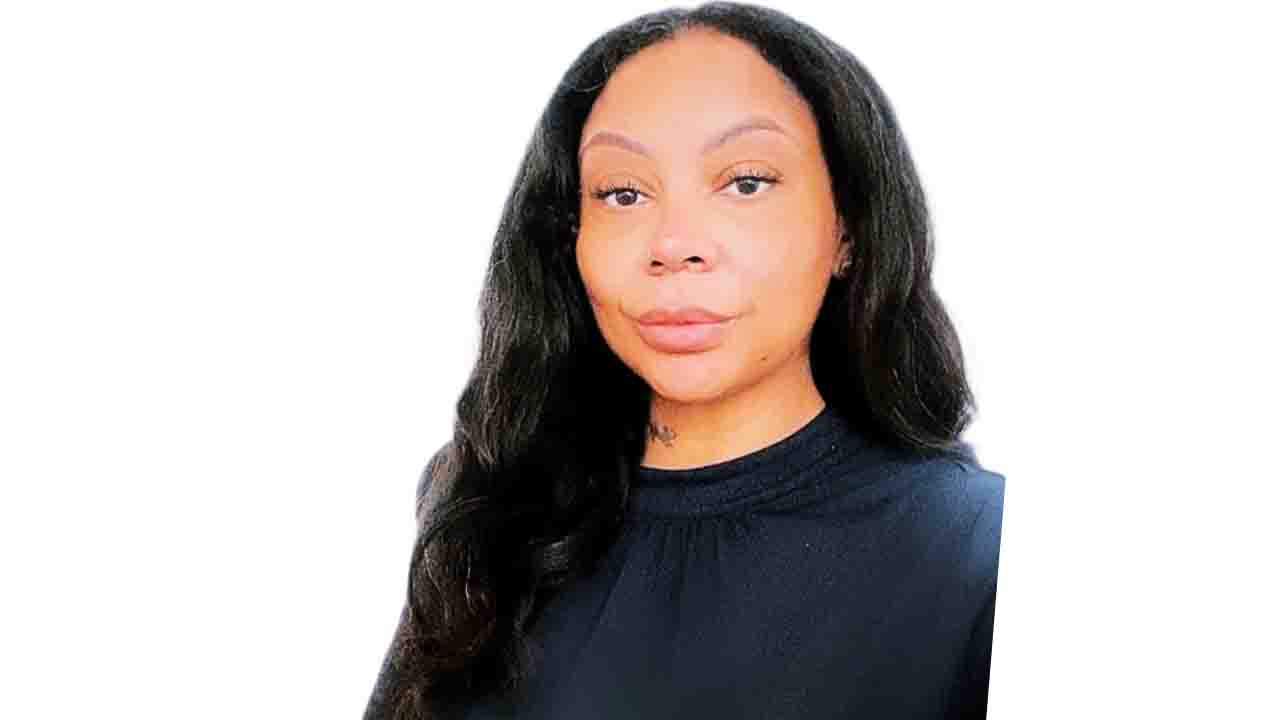
For Destiny Ayo Vaughan, speaking about her childhood means revisiting years of poverty, family violence, exploitation, fear and experiences that she says she did not fully understand until she was much older. Yet, after everything she endured, Vaughan is choosing to speak not simply to tell her own story, but to help create a safer world for children who may be experiencing what she once experienced.
Born in Nigeria, Vaughan recalls growing up in extremely difficult circumstances. She says the house where she lived had no doors, toilet or shower, although, as she jokingly remembered, they did have a television. She lived with her aunt and other families and says she had no memories of her biological parents.
From an early age, she also became aware of the different expectations placed on boys and girls.
In the environment where she grew up, she recalls that girls were largely expected to become mothers and homemakers, while boys were encouraged to pursue education, employment and careers.
Then, at around five years old, Vaughan’s life took a dramatic turn.
She was told she would be going to school. She was excited because she had not expected to have that opportunity. But alongside school came an arrangement she was far too young to understand: she was expected to marry an older man.
According to Vaughan, the man was at least in his twenties, while she was only five.
She recalls visiting him on her way to and from school. At the time, she did not understand the significance of the age difference. She remembers that he was kind to her and would give her food—something that meant a great deal to a child growing up in poverty.
As she grew older, however, she came to understand that the arrangement was connected to an exchange involving her family. She believes her family received animals and other benefits because of the proposed marriage.
Even her education, she says, was partly connected to the arrangement. The man owned a shop, and she was being educated so that she could eventually help him with basic tasks such as counting.
Then, unexpectedly, Vaughan was taken away from that situation.
A woman arrived and told her she was going to Ireland to meet her sister and parents. Vaughan says she did not even know she had a sister.
She and her sister were eventually put on a flight to Ireland. They were given passports, tickets and cash and instructed to find their way through the airport. Neither child spoke English.
Strangers helped them find their gate.
When they eventually arrived in Ireland, Vaughan met her parents for the first time.
But what was supposed to be a reunion would lead into another chapter of her childhood marked by violence.
Vaughan says she witnessed severe abuse against her older sister before eventually becoming a victim herself.
She recalls seeing her sister with a bandaged hand and later discovering that her mother had stabbed her. She describes other incidents in which her sister was beaten and subjected to humiliating forms of punishment.
At first, Vaughan says, she was relieved that the abuse was not directed at her.
Eventually, however, the abuse turned toward her.
She describes being beaten with objects, suffering serious injuries and being denied medical treatment. On one occasion, she says her mother struck her on the head with a plate, causing significant bleeding. Rather than taking her to hospital, alcohol and nail polish were reportedly used in an attempt to stop the bleeding.
Vaughan says she regularly attended school with bruises.
For her, school became more than a place of education. It became a temporary escape.
She says she often went to school hungry and sometimes resorted to eating chalk and sand or taking other children’s lunches because she needed food.
One teacher noticed what was happening.
The teacher began providing her with food and, according to Vaughan, sometimes bought her toys with her own money. Those small acts of kindness became important memories for a child whose home life was dominated by fear.
But there were other experiences that Vaughan says she witnessed during her childhood that would later profoundly shape her understanding of child exploitation.
She recalls accompanying her father, who worked as a DJ and photographer/videographer, to parties where she noticed children being separated from adults and, in her recollection, some children disappearing and later returning appearing distressed.
Vaughan describes one incident in which she says she witnessed an adult sexually abusing a child. At the time, she says she did not fully understand what she was seeing.
Looking back, she says she believes some of the children were being trafficked and sexually exploited.
These are serious recollections and allegations concerning events from Vaughan’s childhood. They are presented here as her account of what she says she experienced and witnessed, rather than as independently established findings.
Eventually, the fear became unbearable.
Vaughan recalls an incident in which she says she was strangled with a rope and lost consciousness. She began to fear that she might not survive to adulthood.
But there was another thought that pushed her to act.
She was afraid that if something happened to her, her younger sister would remain vulnerable.
At 11 years old, Vaughan finally told someone at school what was happening.
Her teachers listened.
This time, adults acted.
When her father arrived at the school, Vaughan says teachers refused to hand her over. A social worker became involved, and she was taken for medical assessment before entering foster care.
For the first time, she was physically separated from the environment in which she had been abused.
But escaping the home did not mean escaping the trauma.
Vaughan describes struggling deeply after entering care. She says she carried enormous responsibility for her younger siblings and had spent much of her childhood trying to protect them while barely surviving herself.
She describes feeling that she had never really been allowed to be a child.
As a teenager, the psychological consequences became increasingly severe.
Vaughan says she was eventually diagnosed with post-traumatic stress disorder. She describes experiencing vivid perceptions of her father even when he was not physically present.
At 16, she experienced what she describes as a mental breakdown and was taken to hospital.
She says that because there were no available beds in the children’s ward, she was placed in an adult mental-health institution, where she witnessed other patients attempting to harm themselves.
Her experience also left her questioning the systems that were supposed to protect her.
Vaughan recalls being discouraged from pursuing legal action against her parents because she was considered too young. She also describes being required to attend visits with the people she says had abused her.
Eventually, she stopped attending the visits, and her parents lost custody.
For Vaughan, healing has involved something more complicated than simply moving away from her past.
It has involved learning to stop blaming herself.
One of the most powerful reflections from her story is her observation that society often tells survivors to forgive their abusers, while giving far less attention to the need for survivors to forgive themselves.
For Vaughan, understanding that the child she once was was not responsible for what happened to her became an important part of moving forward.
Today, she is trying to turn her experiences into advocacy.
At around 19, she started Mind the Gap Ireland, a social project that collected anonymous stories from people who had experienced sexual violence.
Her ambitions now extend further.
Vaughan wants to develop an educational programme that follows children throughout their education—from primary school through university—teaching them about safety, consent and recognising harmful behaviour.
Her argument is simple: children should not receive information about safety once a year and be expected to understand everything. Education about consent and personal safety should develop alongside them.
Perhaps the most powerful reason behind her work is something Vaughan wishes she had experienced herself.
She wishes she had seen someone like her when she was younger.
Someone who could tell her that what was happening was wrong.
Someone she could trust.
Someone who could help her understand that she was not responsible for the abuse.
And someone who could give her permission to speak.
Now, she hopes to become that person for someone else.
Vaughan acknowledges that sharing her story publicly is frightening. She does not know how everyone will respond. But she believes that vulnerability can serve a purpose if it encourages even one child or survivor to seek help.
“If it means that I put myself out there in the most vulnerable way” so that someone might recognise their own experience and decide to tell somebody, she says, then it is worth doing.
Her story is ultimately not only about what happened to her.
It is also about what happens when a survivor decides that fear will no longer define the rest of their life.
“I don’t want to live in fear anymore,” Vaughan says.
For someone who once doubted she would even make it to adulthood, that statement carries extraordinary weight.
Destiny Ayo Vaughan survived a childhood she says was defined by violence, deprivation and fear.
Today, she is trying to transform that survival into purpose and to ensure that children have the knowledge, language and support to speak before their suffering becomes their entire childhood.
Her story raises difficult questions about child protection, safeguarding, migration, trafficking, institutional responsibility and the systems designed to protect vulnerable children.
But above all, it carries one message: children need to know that what is happening to them is not their fault, and that there is someone they can tell.