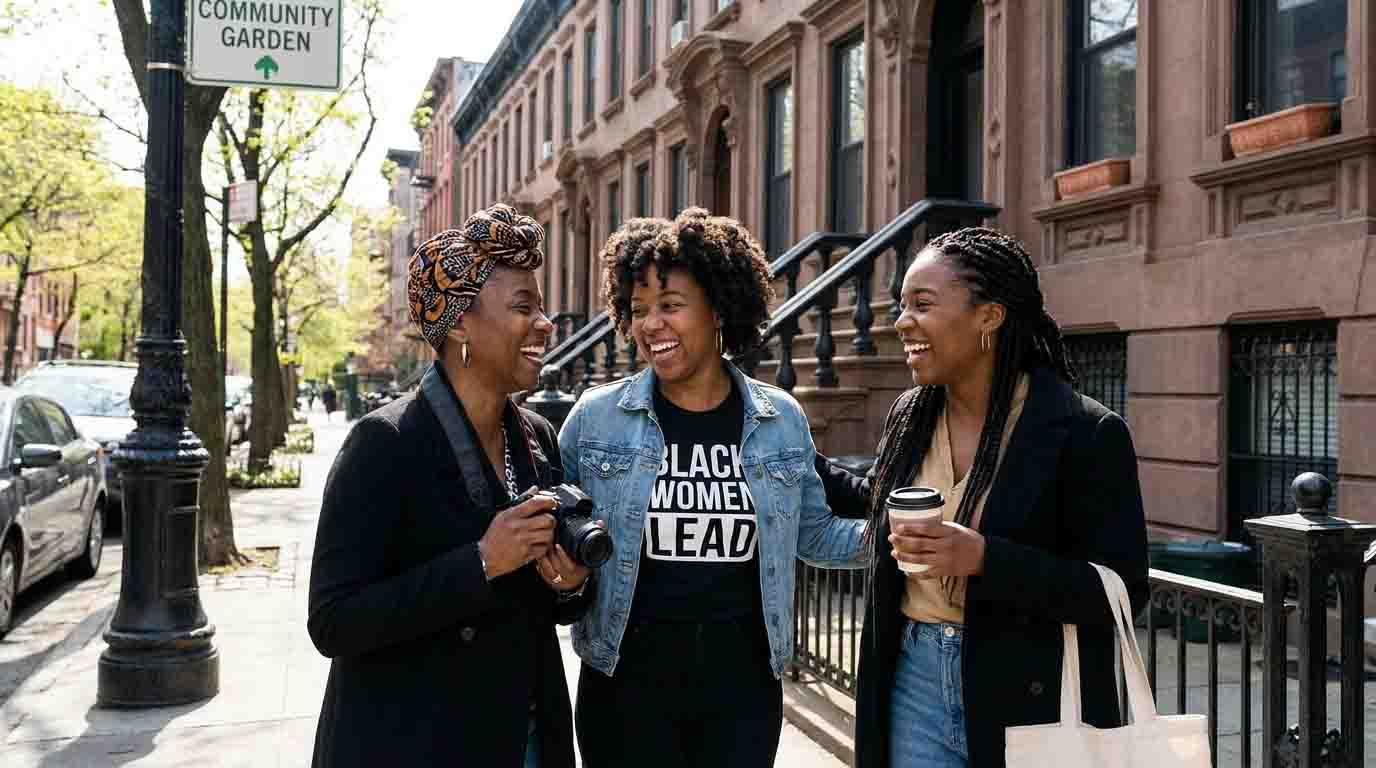

Across social media, a statistic has been circulating widely:
Black women make up a very small percentage of stay-at-home wives in the United States, while more than 80% are breadwinners.
While some of the online figures are often oversimplified, the broader reality behind the discussion is true:
Black women in America are significantly more likely to participate in the workforce and contribute financially to their households than many other groups.
The conversation is not simply about gender roles.
It is deeply connected to history, economics, race, family structure, and survival.
The Numbers Behind the Conversation
According to research from the Pew Research Center and U.S. labor statistics:
- Black mothers in the United States have among the highest labor-force participation rates.
- Black women are more likely to be primary or co-breadwinners in their homes.
- Stay-at-home motherhood rates among Black women are lower than among White, Asian, and Hispanic mothers.
Some studies have shown that nearly:
80% of Black mothers are breadwinners, co-breadwinners, or significant contributors to household income.
This includes:
- single mothers
- married women contributing substantially to household finances
- and women serving as primary earners
However, social media often simplifies these numbers without explaining the economic realities behind them.
A Historical Reality, Not a New Trend
The image of the stay-at-home wife has never reflected the reality for many Black women in America.
Historically, Black women have always worked often out of necessity.
During slavery, segregation, and even after the civil rights era, Black women were heavily represented in:
- domestic work
- agriculture
- caregiving
- factory jobs
- service industries
Unlike some groups that experienced long periods where single-income households became more common, many Black families historically depended on dual incomes simply to survive.
For generations, working was not optional for many Black women.
It was essential.
The Wealth Gap Plays a Major Role
One major reason Black women are less likely to become stay-at-home mothers is economics.
The racial wealth gap in America remains substantial.
According to multiple U.S. economic studies:
- White households generally hold significantly more generational wealth than Black households.
- Black families are more likely to face financial pressures requiring multiple incomes.
- Wage inequality and economic instability continue to affect Black communities disproportionately.
This means many families simply cannot afford to rely on one income.
In many households, Black women are not only supporting children they are also helping support extended family members, parents, or relatives.
Single Motherhood and Household Structure
Family structure also plays a major role in the statistics.
Black women in the U.S. are statistically more likely to:
- head single-parent households
- raise children independently
- or serve as primary caregivers
This naturally increases workforce participation because there may not be another income source available.
However, experts caution against reducing Black women solely to “strong breadwinners.”
Many women carry enormous financial, emotional, and caregiving responsibilities simultaneously.
The Emotional Cost of Constant Survival
While the “strong Black woman” narrative is often praised culturally, it can also carry hidden emotional costs.
Many women experience:
- burnout
- stress
- exhaustion
- pressure to overperform
- limited opportunities for rest or dependence
The expectation to always “hold everything together” can become emotionally and mentally draining.
This is why conversations about financial inclusion, wealth building, mental health, and support systems are becoming increasingly important.
What Does This Mean for African Women?
For African audiences, the discussion is also relevant because many African women experience similar realities.
Across much of Africa:
- women dominate informal trade
- women financially support families
- women combine caregiving with entrepreneurship
- and many households depend heavily on female economic participation
In countries like Nigeria, Ghana, and Kenya, women often carry substantial economic responsibilities while still handling much of the unpaid domestic labor at home.
The difference is that these conversations are sometimes discussed more openly in the United States because of available labor and demographic data.
Beyond the Statistics
The bigger issue is not whether women should or should not stay home.
The real question is:
Do women genuinely have the freedom to choose?
For many women globally, economic conditions determine that choice long before personal preference enters the conversation.
Some women may prefer to stay home with children but cannot afford to.
Others may choose careers and financial independence intentionally.
The goal should not be to shame working women or stay-at-home mothers.
The goal should be creating systems where women have:
- economic security
- real choices
- support structures
- and opportunities to thrive without constant financial pressure.
Rethinking Success and Support
The discussion around Black women, breadwinning, and stay-at-home motherhood reveals something much deeper about modern society:
Women continue to carry enormous economic responsibility both inside and outside the home.
As conversations about gender, work, wealth, and family continue evolving, one thing remains clear:
Economic empowerment matters.
But so does support, balance, wellbeing, and the ability for women to choose the kind of life they truly want rather than simply surviving the one circumstances force upon them.


